

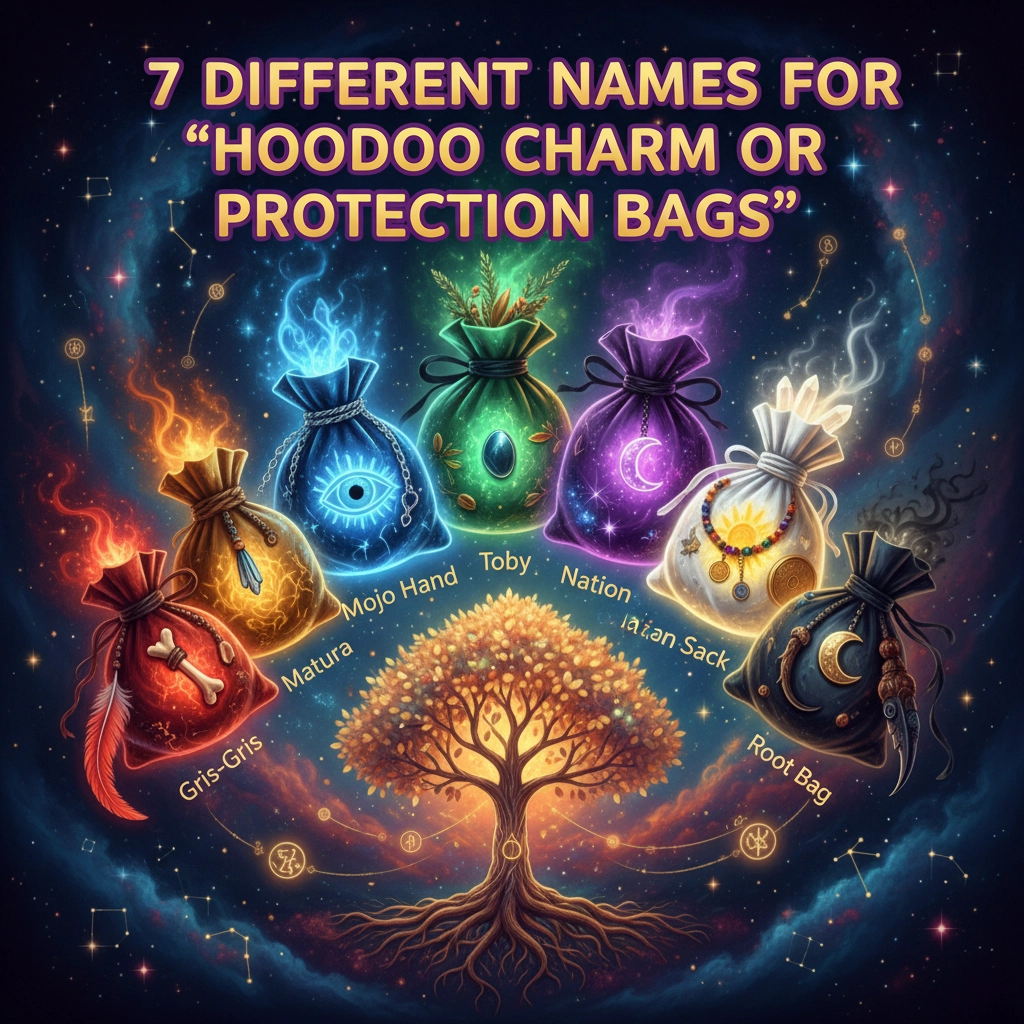
What if I told you that one small flannel bag has sparked more curiosity, controversy, and reverence than almost any other tool in American folk magic? You’d probably think I was exaggerating: until you dive into the rich tapestry of names that different communities have lovingly bestowed upon these powerful little bundles.
Most people think there’s just one name for these mystical pouches. They’re wrong. Dead wrong.
The truth is, Hoodoo charm and protection bags carry as many names as there are communities that have cherished, feared, and relied upon them. Each name tells a story: of migration patterns, cultural blending, regional dialects, and the beautiful complexity of African-American spiritual traditions that refused to be silenced.
The Mojo Bag: Where Power Meets Purpose
Let’s start with the heavyweight champion: the mojo bag. This isn’t just a name; it’s a declaration of intent. When someone says “mojo,” they’re talking about personal power, magnetic influence, and that indefinable something that makes things happen.
The mojo bag represents the most universally recognized term across the United States. These small flannel pouches, typically red but sometimes other colors, contain carefully selected herbs, roots, minerals, and personal items chosen for specific magical purposes. Whether you’re seeking love, protection, prosperity, or revenge, your mojo bag becomes your spiritual ally.
But here’s what most people don’t realize: the power isn’t just in the contents: it’s in the relationship between the carrier and the bag itself. A mojo bag without proper feeding, attention, and respect is just fabric and plant matter. With the right care, it becomes a conduit for transformation.
Gris-Gris: The French Connection That Changed Everything
Moving into Louisiana and areas touched by French colonial influence, we encounter the gris-gris bag (pronounced “gree-gree”). This name carries the weight of cultural fusion: African spiritual practices blending with French Catholic mysticism and Caribbean influences.
The spelling variations alone tell a story: gris-gris, gri-gri, gree-gree. Each variation reflects different communities’ attempts to capture the sound and meaning of something that transcended simple translation. The silent “s” in the traditional spelling hints at the French linguistic influence that shaped Louisiana’s magical landscape.
What makes gris-gris bags particularly fascinating is their connection to the broader Creole magical system. They weren’t just African-American tools: they became part of a multicultural spiritual ecosystem that included practitioners of various backgrounds, all seeking the same thing: a tangible way to influence the invisible forces around them.
The Mojo Hand: When Your Bag Becomes Your Right Hand
The mojo hand represents one of the most poetic names in the Hoodoo tradition. Think about it: your hand is your primary tool for interacting with the physical world. When practitioners started calling their charm bags “hands,” they were making a profound statement about the role these tools played in their spiritual practice.
A mojo hand isn’t just carried; it’s wielded. It becomes an extension of the practitioner’s will and intention, as natural and necessary as their physical hands. This name emphasizes the active, participatory nature of Hoodoo work: you don’t just own a mojo hand, you work with it.
Regional variations of this name pop up everywhere: “conjure hand,” “lucky hand,” and simply “hand.” Each variation reflects how deeply integrated these tools became in practitioners’ daily lives and spiritual work.
Conjure Bag: Truth in Advertising
Sometimes the most straightforward name carries the most power. The conjure bag doesn’t hide behind euphemisms or poetic language: it tells you exactly what it is and what it does. This is conjure work, plain and simple.
The term “conjure” itself carries deep historical significance in African-American communities. It represents the preservation of African spiritual practices in the face of enslavement and cultural suppression. When someone calls their charm bag a “conjure bag,” they’re connecting themselves to this unbroken chain of spiritual resistance and empowerment.
Conjure bags often served multiple purposes within communities. They weren’t just personal tools: they were symbols of cultural continuity, reminders that certain forms of knowledge and power couldn’t be stolen or destroyed.

Toby: The Regional Mystery That Endures
Here’s where things get really interesting. The toby represents one of the most regionally specific names, and honestly, its origins remain somewhat mysterious even to scholars of Hoodoo traditions. What we do know is that certain communities, particularly in specific areas of the American South, used this term with the same reverence others reserved for “mojo” or “gris-gris.”
The beauty of regional names like “toby” lies in their intimacy. They represent the kind of insider knowledge that marked true community membership. If you knew what a “toby” was and how to use it, you belonged. If you didn’t, you were clearly an outsider.
This insider/outsider dynamic played a crucial role in protecting Hoodoo traditions from exploitation and misrepresentation. Specific regional terminology helped maintain the integrity of practices within trusted community circles.
Nation Sack: Gender, Geography, and Group Identity
The nation sack brings us into the fascinating intersection of gender and geography in Hoodoo terminology. Particularly around Memphis, this term specifically referred to mojo hands carried by women, though its usage expanded to other contexts and regions over time.
The word “nation” in this context likely refers to spiritual allegiance or community belonging rather than political nationality. Your nation sack connected you not just to spiritual forces, but to the community of women who shared similar struggles, hopes, and magical practices.
This gendered terminology reveals how Hoodoo traditions recognized and honored different spiritual roles and relationships. Women’s magical work often focused on protection of family, home, and community: concerns that the “nation sack” terminology beautifully captures.

Root Bag: Where Botany Meets Belief
Finally, we have the root bag, a name that emphasizes the botanical foundation of Hoodoo practice. This term directly references the roots, herbs, and plant materials that form the heart of most charm bags.
Root bags highlight the deep connection between Hoodoo and traditional African botanical knowledge. Enslaved Africans brought sophisticated understanding of plant medicine and spiritual botany to the Americas, and root bags represent one way this knowledge survived and thrived.
The emphasis on “roots” also speaks to the foundational nature of these practices. Just as plant roots anchor and nourish the visible plant, Hoodoo roots anchor and nourish the spiritual lives of practitioners and their communities.
Why These Names Matter More Than You Think
Each name represents a different lens through which communities understood these powerful tools. The mojo bag emphasizes personal power. The gris-gris bag highlights cultural fusion. The mojo hand stresses active participation. The conjure bag celebrates straightforward purpose. The toby preserves regional intimacy. The nation sack honors community belonging. The root bag connects to botanical wisdom.
Together, these seven names create a linguistic map of how African-American communities across different regions and generations have understood, adapted, and preserved their spiritual technologies. They represent resistance, creativity, and the beautiful human tendency to name what matters most to us.
The next time someone dismisses these practices as “just superstition,” remember: traditions that generate seven different names for the same tool across multiple centuries and geographic regions aren’t dying: they’re thriving. They’re adapting. They’re surviving.
And most importantly, they’re continuing to serve the communities that need them most. The names change, but the power endures. That’s not superstition; that’s spiritual resilience at its finest.

