

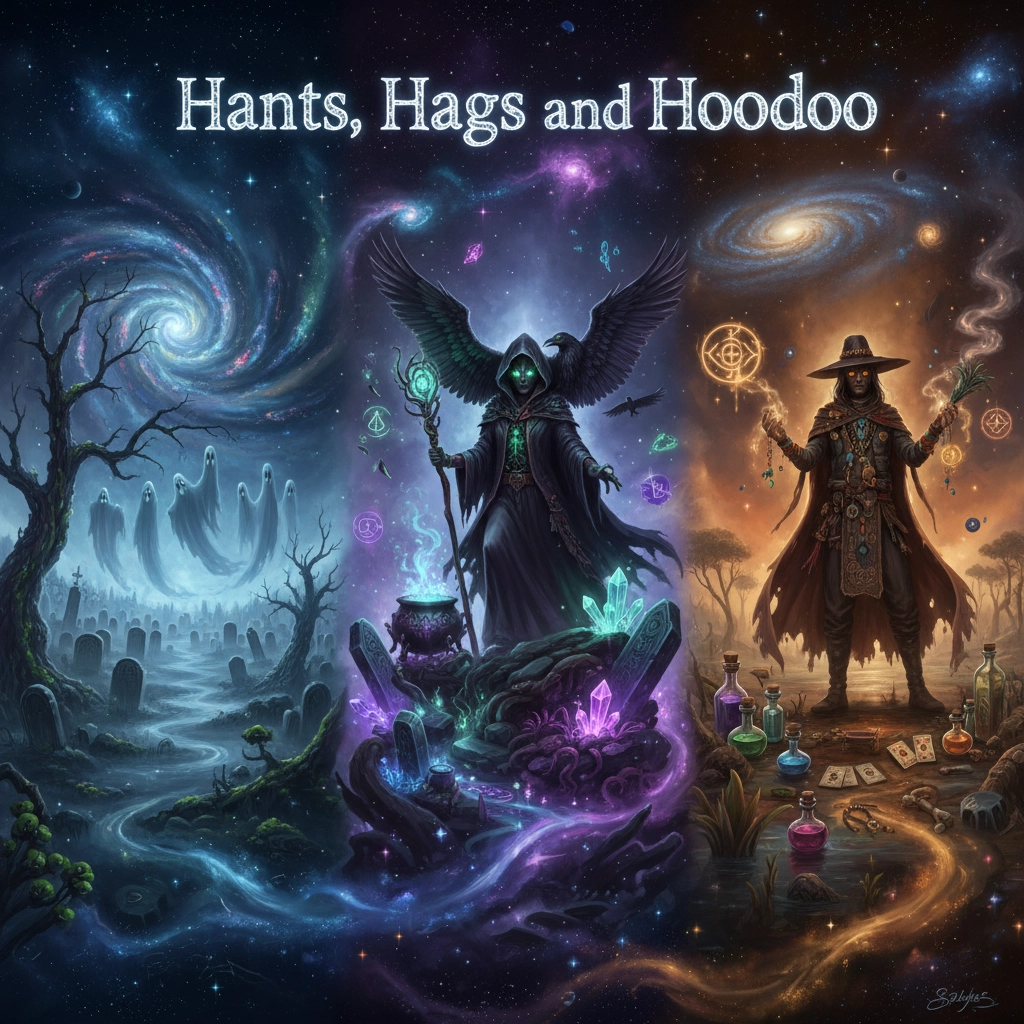
What if everything you thought you knew about supernatural protection was painted in the wrong color? What if the spirits your ancestors feared most weren't hiding in shadowy corners, but walking among us in borrowed skin?
The world of haints, hags, and hoodoo isn't some dusty collection of folklore, it's a living, breathing system of spiritual knowledge that has protected communities for centuries. These aren't just ghost stories told around campfires. They're sophisticated spiritual technologies developed by people who understood that the veil between worlds is thinner than we'd like to believe.
The Haints That Walk Among Us
Picture this: You're sitting on a Southern porch painted in that distinctive pale blue-green color, and an elder tells you it's not just for decoration. That color, Haint Blue, is your first line of defense against spirits trapped between worlds.
Haints aren't your typical Hollywood ghosts. In Gullah Geechee tradition, these are unsettled spirits caught in spiritual limbo, unable to cross over to the afterlife. The enslaved descendants of Western Central Africans who labored on coastal plantations across the Carolinas, Georgia, and Florida didn't just endure, they created one of the most sophisticated spiritual protection systems ever developed.
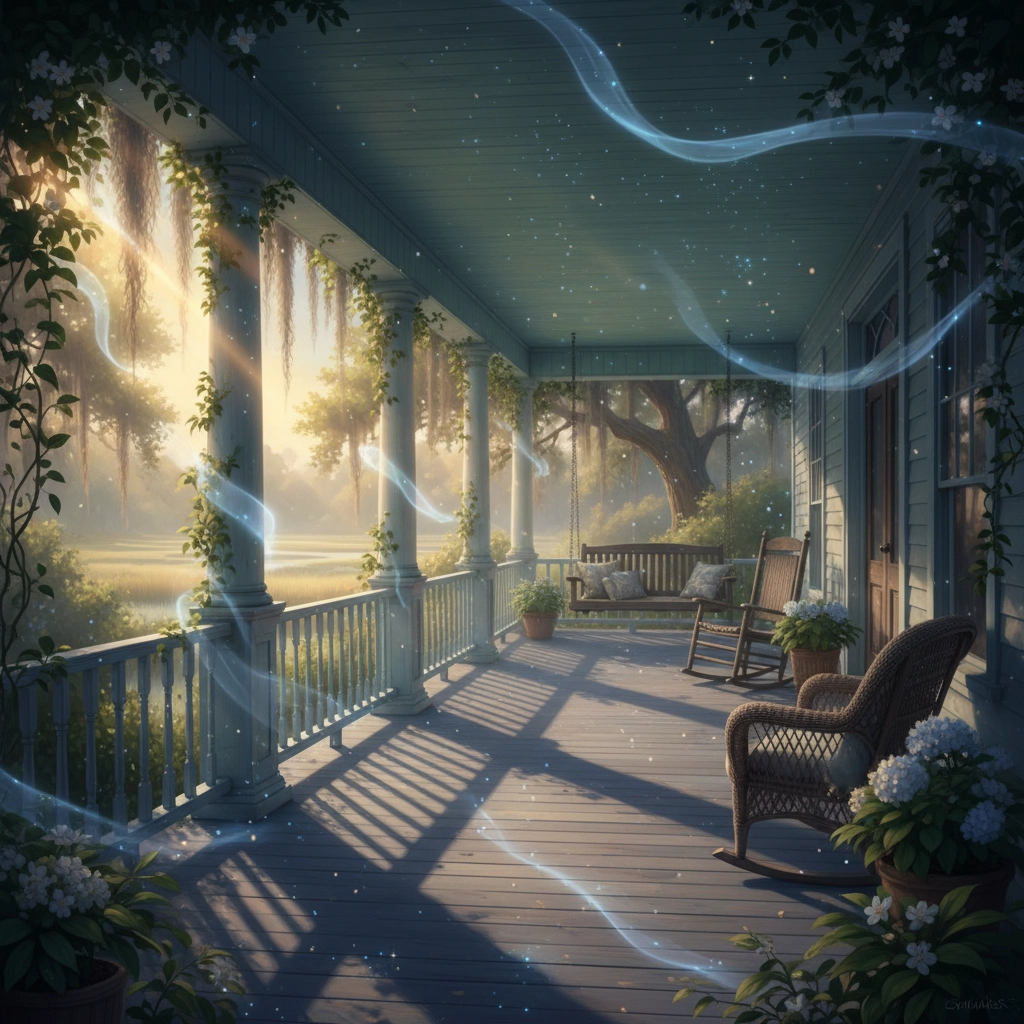
The genius of Haint Blue lies in its deception. By painting porch ceilings, windows, and doors with this Robin's Egg Blue hue, families created the illusion of water and sky, natural boundaries that haints cannot cross. These spirits, no matter how determined, would be fooled into believing they were encountering an impassable barrier.
But the protection didn't stop with paint. Gullah Geechee families developed an arsenal of spiritual countermeasures that would make modern security systems seem primitive:
- Brooms hung across doorways created mystical barriers
- Rice or seeds scattered on floors forced obsessive spirits to count each grain
- Salt dehydrated any stolen skin, preventing malevolent entities from using human disguises
The most terrifying of these spirits were the boo hags, entities that could steal and wear human skin during daylight hours, drain people's energy while they slept, then shed their borrowed flesh to hunt for new victims under cover of darkness.
The Sovereignty of Hags
Now shift your perspective from the American South to the misty highlands of Scotland and Ireland, where hags weren't just monsters: they were goddesses in disguise.
The Celtic understanding of hags reveals a profound spiritual truth: what appears frightening on the surface often conceals divine wisdom beneath. The Cailleach, that ancient hag goddess of creation and harvest, wasn't just a scary old woman: she was the personification of the land itself, testing heroes to see if they possessed the courage to rule wisely.

Here's where it gets fascinating: Celtic hag mythology follows a pattern that reveals deep psychological and spiritual insights. The sovereignty hag appears hideous and frightening to potential kings. Only the hero who approaches without fear, who learns to love the hag exactly as she is, discovers her true nature as a beautiful goddess. This isn't just mythology: it's a spiritual teaching about accepting the shadow aspects of power and responsibility.
Black Annis stalked the caves of Leicestershire with her single eye, iron claws, and cannibalistic hunger for children and lone travelers. The Hag of the Mist wailed near streams and crossroads, her arms waving as a portent of death. These weren't random monsters: they were boundary guardians, teaching communities about the liminal spaces where danger dwells.
The Storm Hags known as The Cailleachan embodied nature's destructive power, reminding humans that the forces of creation and destruction are two sides of the same cosmic coin. They weren't evil: they were elemental, representing the raw power that both creates and destroys worlds.
Hoodoo: The Science of Spiritual Survival
But here's where the story gets really interesting: hoodoo represents the synthesis of all these traditions into something entirely new and powerfully effective.
African American folk magic didn't emerge in a vacuum. It was forged in the crucible of survival, combining African spiritual technologies, Native American plant knowledge, and European magical practices into a system that actually worked. When your life depends on spiritual protection, you don't have the luxury of practices that are merely symbolic.
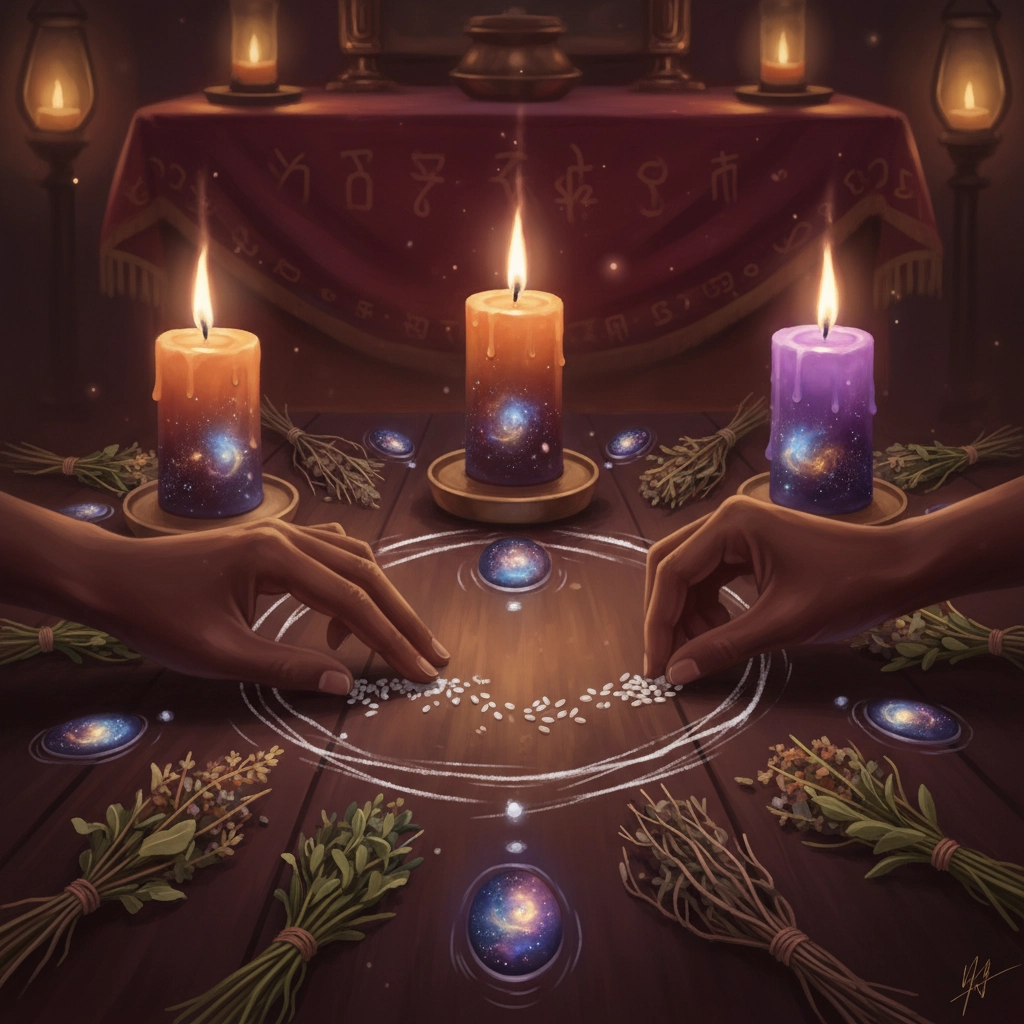
In the Gullah Geechee tradition, hoodoo practitioners developed specific countermeasures for different types of spiritual threats. Platihunts: shape-shifting spirits that lure people into danger: could be slowed down by pouring whiskey on the ground, exploiting their compulsion to consume it.
The sophistication of these practices becomes clear when you understand their layered approach to protection:
Physical barriers: Haint Blue paint, salt lines, and strategically placed mirrors
Spiritual decoys: Counting materials like rice and seeds to occupy obsessive spirits
Chemical deterrents: Whiskey and other substances that interfere with spiritual manifestation
Psychological protection: Prayers, charms, and rituals that strengthen the practitioner's spiritual defenses
Modern practitioners continue these traditions through rootwork, maintaining the knowledge that helped communities survive centuries of spiritual and physical threat.
The Living Legacy
What's remarkable about haints, hags, and hoodoo is how these traditions continue to evolve and protect communities today. Walk through any Southern hardware store and you'll find Haint Blue paint on the shelves: though most buyers now use it decoratively, unaware they're participating in an ancient protective ritual.
The wisdom embedded in these practices transcends simple superstition. They represent sophisticated understandings of psychology, community protection, and spiritual boundaries that modern society is only beginning to appreciate.
Consider the psychological accuracy of hag mythology: the sovereignty tests reveal deep truths about leadership requiring the courage to embrace difficult truths. The nightmare aspects of the Old Hag perfectly describe what we now call sleep paralysis, showing how traditional knowledge often preceded scientific understanding by centuries.

Where Worlds Collide
The intersection of haints, hags, and hoodoo creates a comprehensive spiritual worldview that acknowledges both danger and protection, shadow and light. These traditions don't promise easy answers or simple solutions. Instead, they offer tools for navigating a world where spiritual forces are real and active.
The Gullah Geechee understanding of boo hags stealing skin speaks to deep anxieties about identity and authenticity. Celtic hag goddesses testing worthiness reveal truths about power and responsibility. Hoodoo's practical magic demonstrates that spiritual work requires both knowledge and action.
These aren't museum pieces: they're living traditions that continue to evolve and adapt to contemporary challenges. Modern practitioners understand that the technology serves the tradition, not the other way around.
The Wisdom Keepers
Today's spiritual practitioners working within these traditions carry forward knowledge that spans continents and centuries. They understand that haints, hags, and hoodoo represent more than folklore: they're sophisticated spiritual technologies developed by communities who understood that survival required both practical and spiritual skills.
The paint still protects, the wisdom still guides, and the traditions still serve those who understand their deeper purposes. In a world that often dismisses such knowledge as superstition, these practices continue to demonstrate their effectiveness for those who approach them with respect and understanding.
The spirits haven't disappeared: they've simply learned to navigate our modern world while we've forgotten how to see them. But the protection remains, painted blue on porch ceilings and carried forward in the hearts of those who remember why their ancestors knew these things mattered.

