

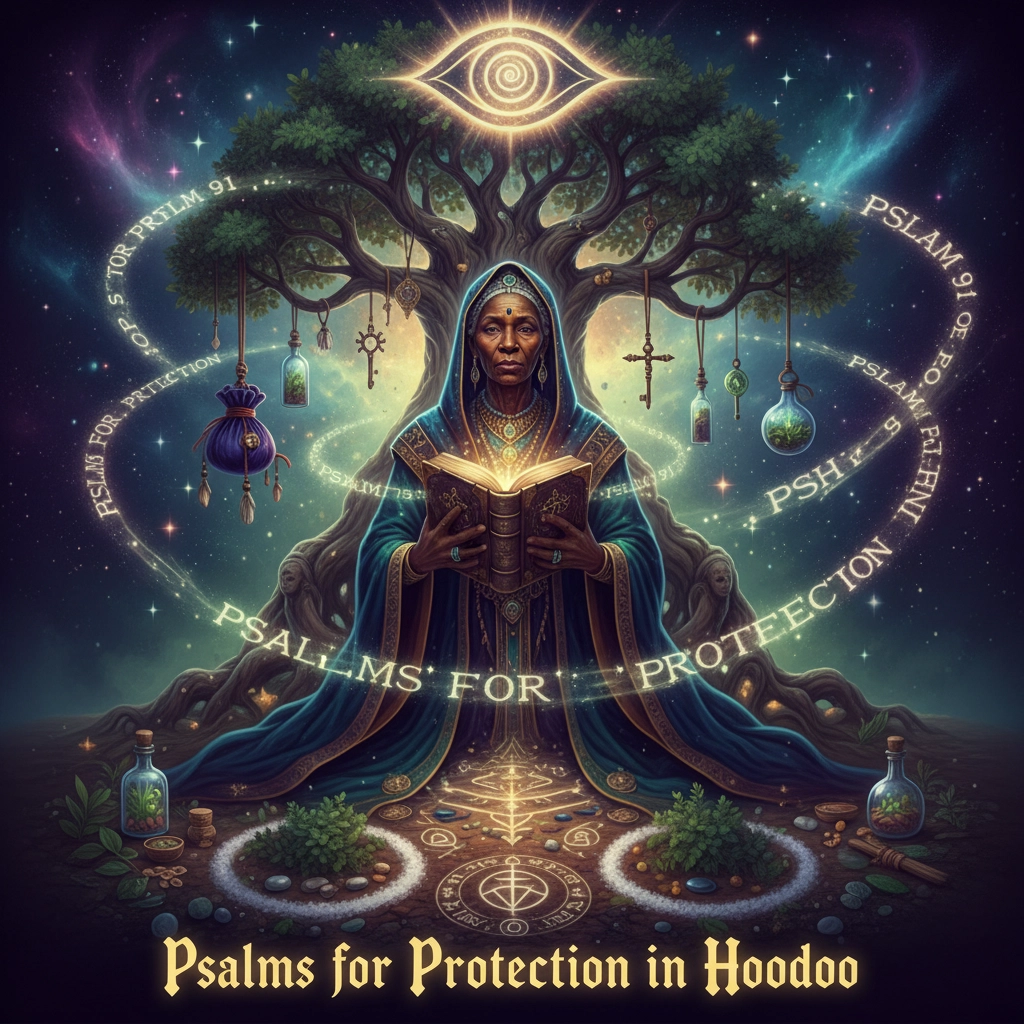
What if the very book used to suppress spiritual freedom became the greatest weapon for protection and empowerment? In the world of Hoodoo, this isn't just poetic irony: it's living reality. The psalms, those ancient songs of David, have been transformed from mere scripture into powerful shields against spiritual attack, misfortune, and evil intentions.
The story of psalms in Hoodoo isn't just about religious practice: it's about spiritual resistance, cultural survival, and the brilliant adaptation of our ancestors who turned oppression into opportunity.
When the Bible Became a Grimoire
Picture this: enslaved people forced to abandon their ancestral spiritual practices, permitted only one book: the Bible. But what their oppressors didn't realize was that they were handing over one of the most potent collections of magical texts ever assembled. The psalms, with their calls for divine intervention, protection from enemies, and appeals for justice, became the foundation for a new form of spiritual warfare.
This wasn't about replacing African traditions: it was about survival. When your ancestors' songs were forbidden, you learned to sing David's songs with the same fierce intention. When your protective rituals were banned, you discovered that the Christian God could be petitioned just as powerfully as any orisha or spirit.

The transformation was profound: psalms became spells, verses became incantations, and biblical passages became the backbone of American folk magic. What emerged wasn't just Christianity: it was something entirely new, a fusion that honored both biblical tradition and African spiritual wisdom.
The Mighty Fortress: Psalm 91
Ask any Hoodoo practitioner about protection, and they'll likely mention Psalm 91 first. This isn't coincidence: it's recognition of spiritual power that transcends denominational boundaries. Known as the "soldier's psalm," Psalm 91 promises comprehensive protection that covers every conceivable danger.
The psalm doesn't just offer comfort; it declares war on fear itself. "You will not fear the terror of night, nor the arrow that flies by day, nor the pestilence that stalks in the darkness, nor the plague that destroys at midday." These aren't gentle reassurances: they're bold proclamations of spiritual immunity.
In Hoodoo practice, Psalm 91 is recited during times of specific danger, written on paper and carried as a protective charm, or prayed over baths and candles to create spiritual armor. The psalm's promise that "a thousand may fall at your side, ten thousand at your right hand, but it will not come near you" speaks to practitioners who understand that spiritual protection is both personal and powerful.
The Shepherd's Shield: Psalm 23
While many know Psalm 23 as a funeral psalm, Hoodoo practitioners recognize its true power as a protection and blessing formula. The imagery of the Good Shepherd isn't just comforting: it's strategic. This psalm establishes divine guidance through dangerous territory and promises restoration even after spiritual attack.
"Even though I walk through the valley of the shadow of death, I will fear no evil, for you are with me." This isn't passive hope: it's active faith in divine protection during the most treacherous spiritual circumstances. In Hoodoo work, Psalm 23 is used for blessings, protection, and luck, including gambling luck, because it establishes divine favor that extends to all areas of life.
The psalm's closing promise: "Surely goodness and mercy will follow me all the days of my life": creates ongoing protection rather than temporary relief. This is protection that pursues you, not protection you have to constantly seek.
Elemental Defense: Psalm 22:16-17
Some psalms address specific threats, and Psalm 22:16-17 stands as one of Hoodoo's most specialized protective tools. This psalm is specifically recited to repel bad luck and dangers from the four elements: water, wind, earth, and fire. The traditional method involves writing the psalm around a cross drawn on paper, with the names of four angelic princes: Tharsis, Cherub, Ariel, and Seruph: written on the four arms.

These angels govern the earth's elements, and by invoking their protection while reciting the psalm, practitioners create a comprehensive shield against elemental dangers. The paper is carried daily, and the psalm is recited regularly, establishing ongoing protection against natural disasters, accidents, and environmental hazards.
This level of specificity shows the sophisticated spiritual technology that Hoodoo practitioners developed. They didn't just pray for general protection: they created targeted defenses against specific types of spiritual and physical attack.
War Psalms: Psalm 59 Against Enemies
Not all spiritual work is defensive. Sometimes protection requires going on the offensive against those who wish you harm. Psalm 59 serves as Hoodoo's primary weapon against violent enemies and those who actively plot destruction.
This psalm doesn't ask for general protection: it calls for specific action against specific threats. "Deliver me from my enemies, O my God; protect me from those who rise up against me. Deliver me from evildoers and save me from bloodthirsty men." These are the words of someone who knows they're under attack and refuses to remain passive.
In traditional practice, Psalm 59 is prayed with the holy name Jehovah Elohim Tsaba, meaning "the LORD God of hosts." This isn't just asking for help: it's invoking divine military intervention. The psalm's vivid imagery of enemies circling "like dogs" and the appeal for God to scatter them by His power makes it particularly effective for defensive spiritual warfare.
Unshakeable Foundations: Psalm 46
Some protection comes not from defeating enemies but from establishing such strong spiritual foundations that no attack can succeed. Psalm 46 offers this type of comprehensive security, declaring that "God is our refuge and strength, an ever-present help in trouble."
The psalm's promise that believers need not fear even when "the earth gives way and the mountains fall into the heart of the sea" establishes protection that transcends physical circumstances. This is spiritual security that remains stable regardless of external chaos.

In Hoodoo practice, Psalm 46 is particularly powerful during times of upheaval, major life changes, or when facing overwhelming circumstances. It's not just about surviving the storm: it's about remaining unmoved by it.
The Technology of Sacred Words
The power of psalms in Hoodoo lies not just in their words but in how they're employed. This is spiritual technology that requires both faith and technique. Psalms are recited at specific times: morning, noon, and night: recognizing that consistent spiritual practice strengthens protection. They're written on paper and carried as talismans, prayed over candles and baths, and integrated into other ritual work.
Reverend Ray T. Malbrough's work, particularly "The Magical Power of the Saints," provides extensive guidance on using psalms for various purposes including protection from enemies, ensuring safe travel, and general spiritual defense. This isn't casual prayer: it's systematic spiritual work that requires dedication and understanding.
Living Protection in Modern Times
The psalms haven't lost their power in our digital age. If anything, their relevance has increased as we face new forms of spiritual attack, psychological warfare, and environmental dangers that our ancestors couldn't have imagined. The protection these ancient words provide adapts to contemporary threats while maintaining their timeless spiritual authority.
Modern Hoodoo practitioners continue to use these psalms not as museum pieces but as living tools for contemporary protection. They're prayed over smartphones to protect against cyberbullying, recited before job interviews to ensure success, and incorporated into protection work for family members serving overseas.
The beauty of psalmic protection lies in its accessibility. You don't need expensive supplies or elaborate rituals: you need faith, intention, and the willingness to engage with spiritual power that has protected believers for thousands of years.
Your Shield Awaits
The psalms remain what they've always been in Hoodoo tradition: weapons of spiritual warfare disguised as religious poetry. They offer protection that is both immediate and ongoing, both personal and communal, both ancient and eternally relevant.
Whether you're facing enemies, navigating dangerous circumstances, or simply seeking to establish stronger spiritual defenses, these psalms provide time-tested protection that has served practitioners for generations. The question isn't whether they work: the question is whether you're ready to wield their power.
The shield of divine protection isn't just available: it's waiting for you to pick it up and use it. Your ancestors turned oppression into empowerment, scripture into spells, and words into weapons. Their spiritual technology is your inheritance.
Will you claim it?

