

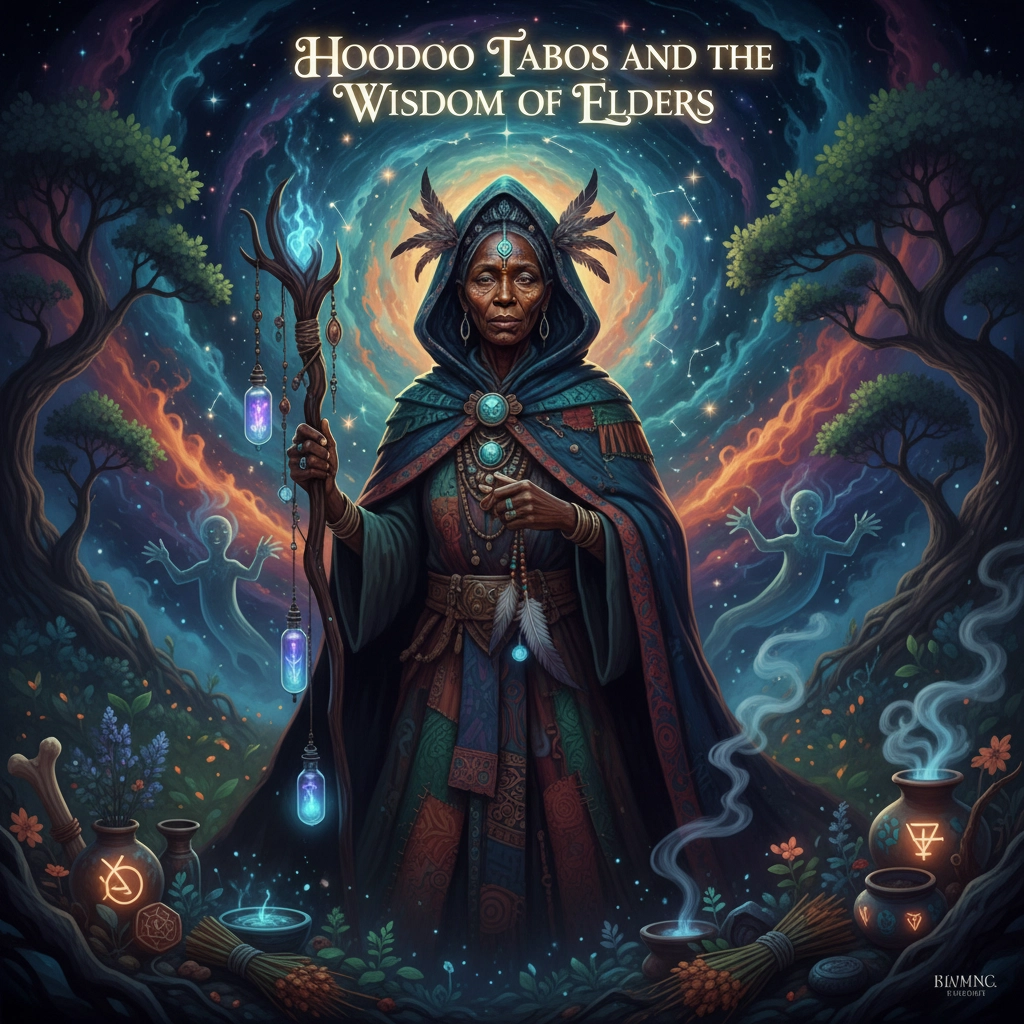
What if everything you think you know about spiritual authority is completely backwards? In most religious traditions, leaders climb hierarchies, earn degrees, or inherit positions. But in Hoodoo: the profound spiritual tradition born from the resilience of enslaved African Americans: true wisdom doesn't come from certificates hanging on walls or fancy titles. It emerges from something far more powerful: community recognition and lived experience.
This isn't just another spiritual tradition. This is a sovereign system of knowledge that has survived centuries of oppression, carrying within it both healing wisdom and protective protocols that demand our deepest respect.
Why Elders Don't Crown Themselves

Here's what might shock you: in authentic Hoodoo practice, you can't simply declare yourself an elder or spiritual authority. The community chooses you. Elders are family and community leaders who have demonstrated wisdom, expertise, and honorable character over time. They don't self-title: they're recognized by those who've witnessed their work, their integrity, and their results.
This community-based validation system serves as one of the tradition's most important protective mechanisms. It prevents spiritual charlatans from exploiting sacred knowledge while ensuring that genuine wisdom holders receive the recognition they've earned through years of dedicated service.
Think about the profound difference this makes. Where other traditions might rely on academic credentials or institutional approval, Hoodoo grounds its authority in something far more meaningful: the lived experience of real people whose lives have been touched, healed, and transformed by a practitioner's work.
The Sacred Art of Knowledge Transmission
In Hoodoo, wisdom doesn't come only from books: it's passed through mouths, hands, and lived experiences. This isn't accidental; it's intentional preservation of a tradition that understands something crucial about spiritual knowledge: it must be embodied, not just intellectualized.
Picture this: an elder teaching a younger practitioner to prepare a protection charm. The knowledge isn't just about which herbs to use or what words to speak. It's about timing, intention, the feel of the roots between your fingers, the way your breath changes during the working. It's about understanding the spirits of the plants, recognizing the subtle signs that indicate when a working is complete.
This mouth-to-hand transmission creates practitioners who don't just know about Hoodoo: they live it. They've absorbed not just the techniques but the wisdom, the ethics, and yes, the boundaries that keep both practitioner and community safe.
Understanding the Unspoken Boundaries

While specific taboos in Hoodoo aren't always explicitly catalogued, the tradition operates within a framework of cultural protocols that every serious practitioner must understand. These aren't arbitrary rules: they're wisdom-based boundaries developed over generations of practice.
The first boundary is respect for the tradition's origins and cultural context. Hoodoo emerged from the experiences of enslaved African Americans who combined West and Central African spiritual practices with indigenous American botanical knowledge and elements of Christianity. This history isn't just background information: it's the living foundation that gives the tradition its power and meaning.
Practitioners understand that this is "a set of religious beliefs and practices that center on ancestor veneration, justice, and a botanical practice of healing and harm known as rootwork." The emphasis on justice isn't coincidental. Hoodoo practitioners, historically known as hoodoo doctors, two heads, root doctors, conjure men and women, or spirit workers, served essential functions in defending enslaved people from harm, sometimes through acts of retaliation and protection.
The Community as Guardian
What happens when someone tries to practice Hoodoo without proper grounding in its cultural context or community connections? They miss the subtle but crucial elements that transform technique into true spiritual work. They lack the lived understanding of when and how to apply certain practices. Most importantly, they miss the ethical framework that guides authentic practitioners.
The community-based nature of Hoodoo serves as its own protective mechanism. Genuine practitioners are known locally. They're called upon to heal physical ailments, retrieve lost objects, and address threatening forces because their neighbors and family members have experienced their effectiveness firsthand.
This local recognition creates natural accountability. Practitioners who consistently produce results, who demonstrate genuine care for their community, and who maintain ethical standards earn trust and recognition. Those who don't, simply don't build lasting practices.
The Sacred and the Profane: Recognizing Authentic Practice

Authentic Hoodoo encompasses a rich tapestry of practices: herbal healing, veneration of African ancestors, counterclockwise circle dancing (Ring Shout), water immersion, sacred music, spirit possession, divination, and the creation of charms for spiritual protection against physical harm and conjure.
Each of these elements requires not just technical knowledge but spiritual maturity. The practice demands what practitioners describe as "blood, sweat, and a lot of dirt": a recognition that genuine spiritual work is embodied, challenging, and transformative.
This embodied nature creates its own boundaries. Casual practitioners quickly discover that effective Hoodoo work requires dedication, respect, and genuine commitment to serving both the spirits and the community. Those seeking quick fixes or flashy results often find themselves naturally filtered out by the tradition's demanding nature.
Modern Challenges to Ancient Wisdom
Today's spiritual marketplace creates new challenges for traditional practices like Hoodoo. Social media can make anyone appear to be an authority. Online courses promise instant mastery. Books claim to reveal all the "secrets" of traditions that were never meant to be commodified.
These modern pressures make the elder system more crucial than ever. Genuine elders serve as bridges between the tradition's historical roots and its contemporary applications. They understand how to maintain authenticity while addressing modern practitioners' needs and questions.
They also serve as cultural guardians, helping practitioners understand the difference between appreciation and appropriation, between learning from a tradition and exploiting it for personal gain.
The Ripple Effect of Respect

When practitioners approach Hoodoo with genuine respect for its elders, its cultural context, and its community-based nature, something beautiful happens. The tradition continues to evolve while maintaining its core integrity. Knowledge flows from those who have earned the right to teach to those ready to receive and carry forward the wisdom.
This isn't just about following rules: it's about participating in a living tradition that has sustained communities through the darkest chapters of American history and continues to offer healing, protection, and empowerment today.
The respect shown to elders ripples outward, creating practitioners who understand that their individual spiritual development serves a larger purpose: maintaining a tradition that has literally saved lives and continues to offer hope and healing to those who need it most.
Walking the Path with Wisdom
Understanding Hoodoo's approach to elder wisdom and cultural boundaries isn't about limitation: it's about liberation. When practitioners understand the tradition's ethical framework and community-based nature, they're free to engage with Hoodoo in ways that honor both its past and its future.
This means approaching elders with humility and genuine desire to learn. It means understanding that true authority in Hoodoo is earned through service, demonstrated effectiveness, and community recognition. It means recognizing that the tradition's boundaries exist not to exclude, but to protect both the practitioners and the sacred knowledge itself.
The path forward requires both courage and humility: courage to engage authentically with a powerful spiritual tradition, and humility to recognize that genuine wisdom takes time, community, and deep respect to develop. In a world that often prioritizes quick fixes and instant gratification, Hoodoo offers something far more valuable: a time-tested path to genuine spiritual power and community healing that honors both ancestors and future generations.

