

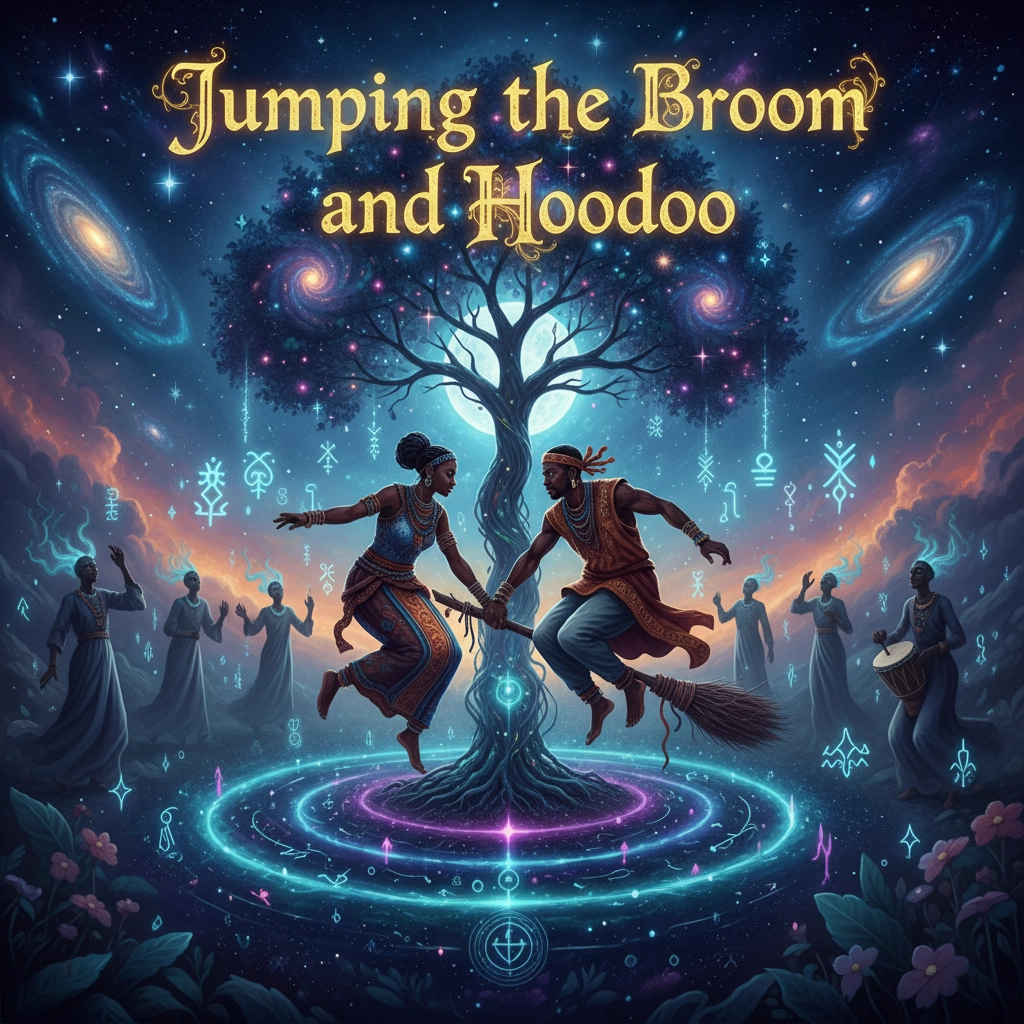
When Love Meets Magic: Why This Simple Act Carries Revolutionary Power
Picture this: two people in love, standing before their community, ready to leap, literally: into their future together. But this isn't just any wedding ritual. When they jump over that humble broom, they're channeling centuries of spiritual wisdom, African ancestral knowledge, and the raw power of Hoodoo folk magic.
Most people see jumping the broom as a quaint wedding custom. What they don't realize is they're witnessing one of the most potent acts of spiritual cleansing and protection in African-American folk tradition.
The Broom: More Than Household Tool, It's a Spiritual Weapon
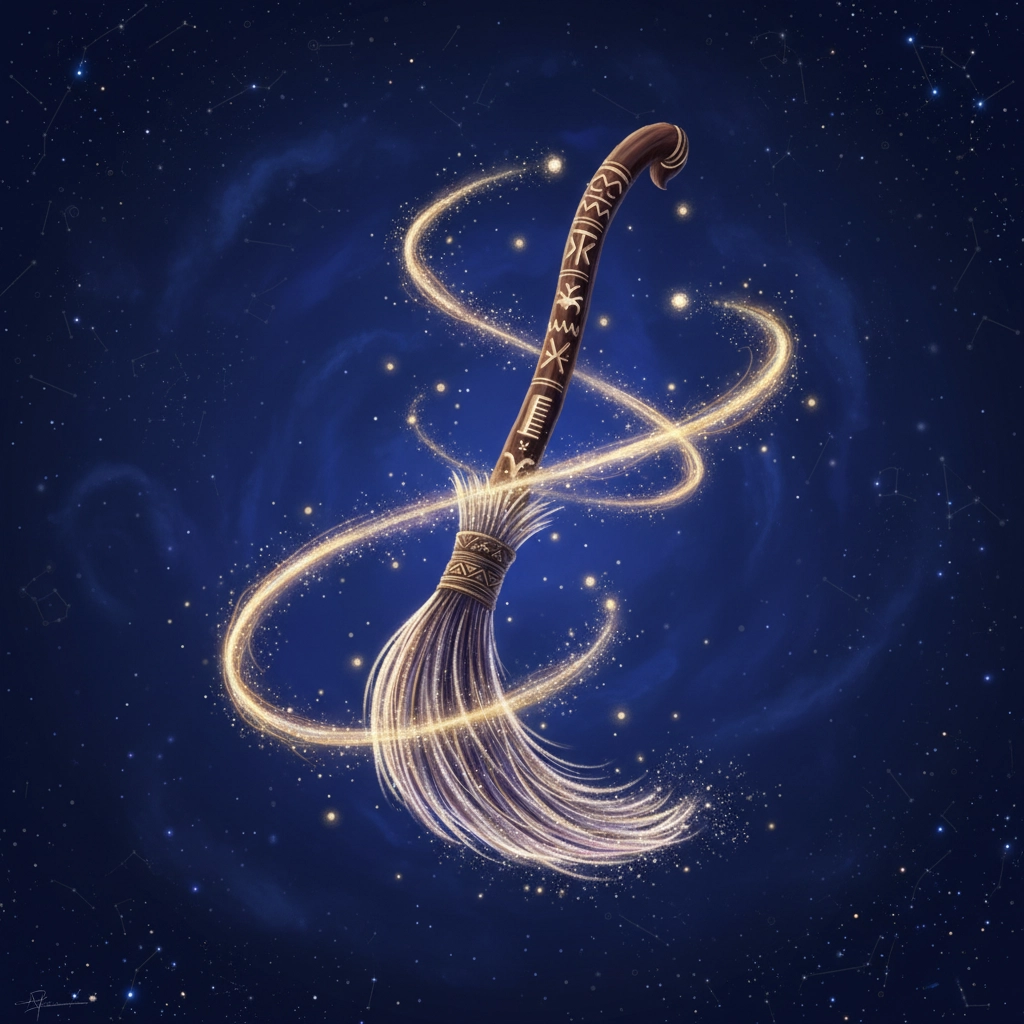
Here's what blows minds: in West African traditions, particularly among the Asante people of Ghana, brooms weren't just for cleaning floors. They were spiritual instruments capable of sweeping away negative energies, past traumas, and malevolent spirits. When enslaved Africans brought this knowledge to the Americas, they didn't just preserve a wedding custom: they smuggled in a complete magical system.
In Hoodoo practice, brooms serve multiple spiritual functions. They cleanse spaces, remove hexes, and create protective barriers. The bristles don't just gather dust; they gather and redirect spiritual energy. When a couple jumps over a broom during their wedding ceremony, they're not performing a cute tradition: they're executing a sophisticated magical operation.
The act itself represents spiritual threshold crossing. As their feet leave the ground and sail over the broom, the couple literally and symbolically transcends their old lives, leaving behind any spiritual baggage, curses, or negative attachments that might threaten their union.
From Plantation to Power: How Enslaved People Weaponized Love
During slavery, jumping the broom became an act of rebellion disguised as celebration. While enslavers controlled nearly every aspect of Black life, they couldn't legislate the spiritual realm. When enslaved couples jumped the broom, they were declaring their union sacred in ways that transcended legal recognition or white approval.
The spiritual technology embedded in this practice was profound. Couples would sweep the ground around their ceremony space before the jump, literally clearing away any negative influences. The broom itself was often prepared with specific intentions: sometimes blessed by elders, sometimes infused with protective herbs and roots common in Hoodoo work.
This wasn't just about marriage; it was about creating spiritual sovereignty in a system designed to deny Black people any autonomy whatsoever.
The Hoodoo Connection: Why Timing and Intention Matter

In authentic Hoodoo practice, jumping the broom incorporates specific magical principles that many modern practitioners have forgotten. The ceremony typically happened at twilight: that liminal time when the veil between worlds grows thin. This timing amplifies the spiritual power of the ritual, making the couple's intentions more potent and their protective barriers stronger.
The direction of the jump matters too. Couples traditionally jumped from east to west, following the sun's path and aligning their union with natural cosmic forces. Some practitioners incorporated crossroads symbolism, positioning the broom at the intersection of two paths to invoke Legba or other crossroads deities who govern transitions and new beginnings.
The broom itself became a focal point for community energy. As witnesses gathered around the couple, their collective intention charged the ritual with exponential power. This community involvement wasn't just social support: it was magical amplification.
Beyond Wedding Bells: The Broom's Broader Magical Applications
While jumping the broom is most famous as a wedding ritual, Hoodoo practitioners employ broom magic in countless other ways. Sweeping from back to front removes negative energy from a space. Sweeping at dawn while reciting specific prayers can break generational curses. Placing a broom by the front door with bristles pointing up creates a protective barrier against harmful intentions.
Some practitioners craft special ritual brooms from specific woods and natural bristles, consecrating them for spiritual work only. These tools never touch ordinary dirt: they're reserved for cleansing auras, clearing sacred spaces, and conducting energy between the physical and spiritual realms.
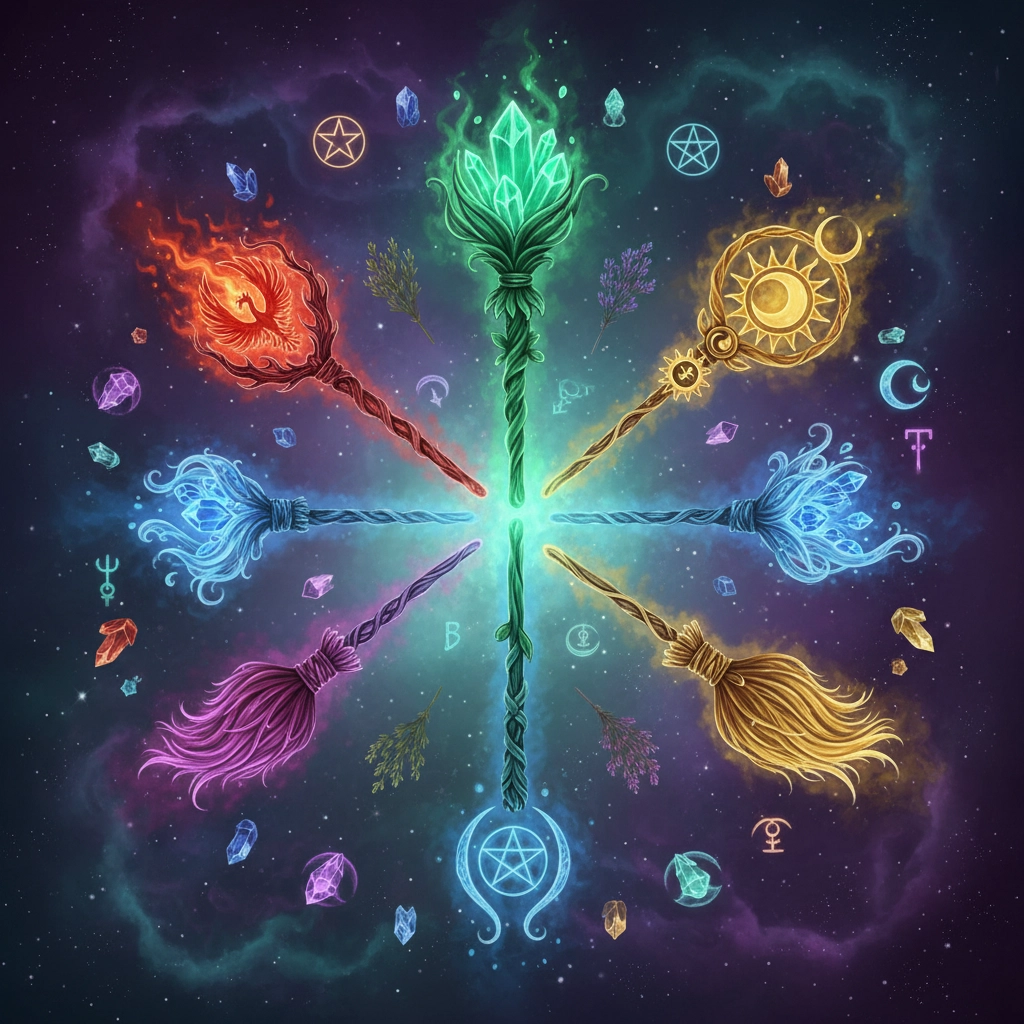
The knowledge runs deeper than most people imagine. Certain brooms are prepared for prosperity work, dressed with oils and wrapped with green ribbons. Others are specifically crafted for protection, incorporating red threads and iron nails. Each serves a distinct magical purpose within the broader Hoodoo system.
When Cultures Collide: The Complex Origins Story
Recent scholarship reveals that jumping the broom wasn't exclusively African in origin. European folk traditions also included broom-jumping ceremonies, particularly among Polish Jewish communities and various Celtic groups. This discovery doesn't diminish the practice's significance: it reveals something even more powerful.
When different magical traditions converge and create something new, the resulting practice often carries amplified spiritual potency. The broom-jumping ceremony that emerged in African-American communities combined West African spiritual technology with European folk magic, creating a uniquely powerful ritual that transcended its individual cultural components.
This cultural synthesis exemplifies Hoodoo itself: a magical system that draws from African rootwork, Native American plant wisdom, European cunning craft, and other traditions to create something entirely new and remarkably effective.
The White Christian Response: Why They Feared the Broom
White slaveholders and Christian ministers recognized the spiritual power embedded in broom-jumping ceremonies, which explains their vehement opposition. They labeled it a "pagan custom" and pressured newly freed Black Americans to abandon the practice in favor of formal church weddings.
This wasn't just cultural prejudice: it was spiritual warfare. White authority figures understood that jumping the broom represented a form of spiritual independence that threatened their control. When Black couples blessed their own unions through ancestral practices, they were declaring their spiritual authority independent of white religious institutions.
The fact that many African-American couples abandoned broom-jumping after Emancipation, seeking formal church recognition instead, reveals the psychological impact of spiritual colonization. The very people who had preserved this powerful magical practice began viewing it as inferior to European Christian ceremonies.
Reclaiming the Power: Modern Revival and Spiritual Authenticity
Today, jumping the broom is experiencing a renaissance, but much of its deeper spiritual significance remains unexplored. Couples incorporate the ritual into their wedding ceremonies without understanding the magical principles that make it effective. The form survives while the spiritual content fades.
For those seeking to honor the complete tradition, the key lies in understanding intention, preparation, and spiritual context. The broom should be consecrated for the ceremony, the timing should align with favorable spiritual conditions, and the community should understand their role in charging the ritual with collective energy.
This isn't about historical reenactment: it's about accessing authentic spiritual technology that our ancestors preserved under impossible conditions. When we jump the broom with full understanding of its magical properties, we're not just honoring the past; we're activating ancestral wisdom that remains potently relevant today.
The Living Tradition: Where Ancient Wisdom Meets Modern Love
The beauty of jumping the broom lies not in its historical authenticity but in its continued spiritual effectiveness. Whether your ancestors were Asante, Celtic, Jewish, or from completely different traditions, the magical principles embedded in this practice remain universally applicable.
Love is a spiritual force that transcends cultural boundaries. When two people commit to sharing their lives, they're engaging in one of the most powerful magical acts possible. Jumping the broom simply provides a time-tested method for sanctifying that commitment while protecting it from negative influences.
The tradition lives because it works. In our modern world filled with divorce, relationship trauma, and spiritual disconnection, perhaps we need the broom's magic more than ever. Not as a quaint historical curiosity, but as a living, breathing spiritual practice that can transform how we understand love, commitment, and the power of intentional ritual.
When couples jump the broom today, they're not just celebrating their union: they're participating in an unbroken chain of spiritual wisdom that connects them to ancestors, community, and the magical forces that bind the universe together. The broom sweeps away the old while clearing space for the new, and in that simple act lies the secret to love that transcends time.

