

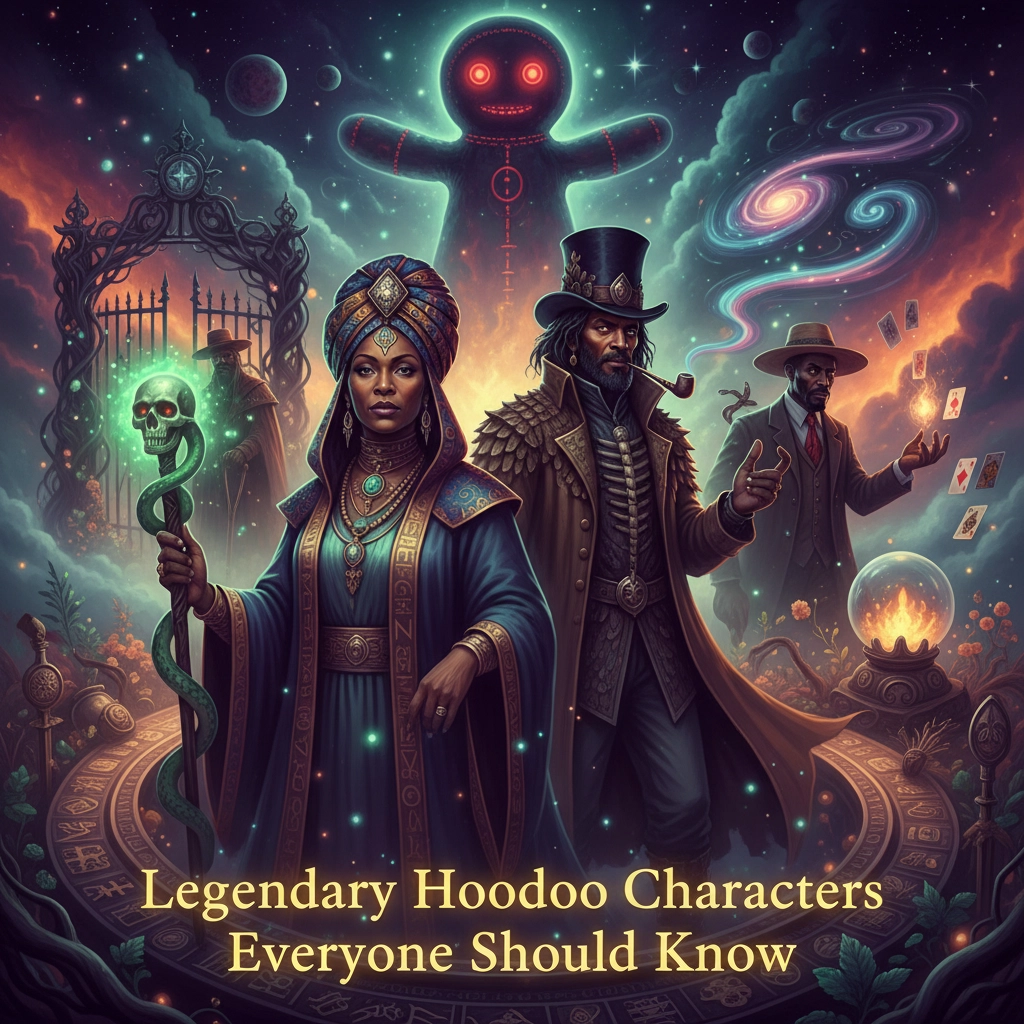
Think you know the real power brokers of American folk magic? The names that built hoodoo from whispered secrets in slave quarters to a thriving spiritual tradition that spans centuries? Most people can maybe name Marie Laveau if they're lucky, but the truth is far richer than that single story.
These aren't just historical footnotes: these are the spiritual revolutionaries who kept African wisdom alive under impossible circumstances, who built networks of healing and resistance that stretched from New Orleans to New York, from the Carolina lowcountry to the Arkansas hills. Their stories aren't just fascinating: they're essential to understanding how hoodoo became the profound spiritual practice it is today.
Marie Laveau: The Queen Who Rewrote the Rules
Let's start with the obvious choice, but for reasons you might not expect. Marie Laveau wasn't just famous: she was strategically brilliant. This free woman of color didn't just practice magic; she weaponized it against a system designed to crush her people.
Living nearly 100 years in 19th-century New Orleans, Laveau was a master of contradiction. She'd hold massive public ceremonies in Congo Square with her giant snake Gran Zombi, making sure everyone knew her power. Then she'd slip quietly into Catholic mass, blending traditions with the kind of spiritual intelligence that kept African practices alive under colonial rule.
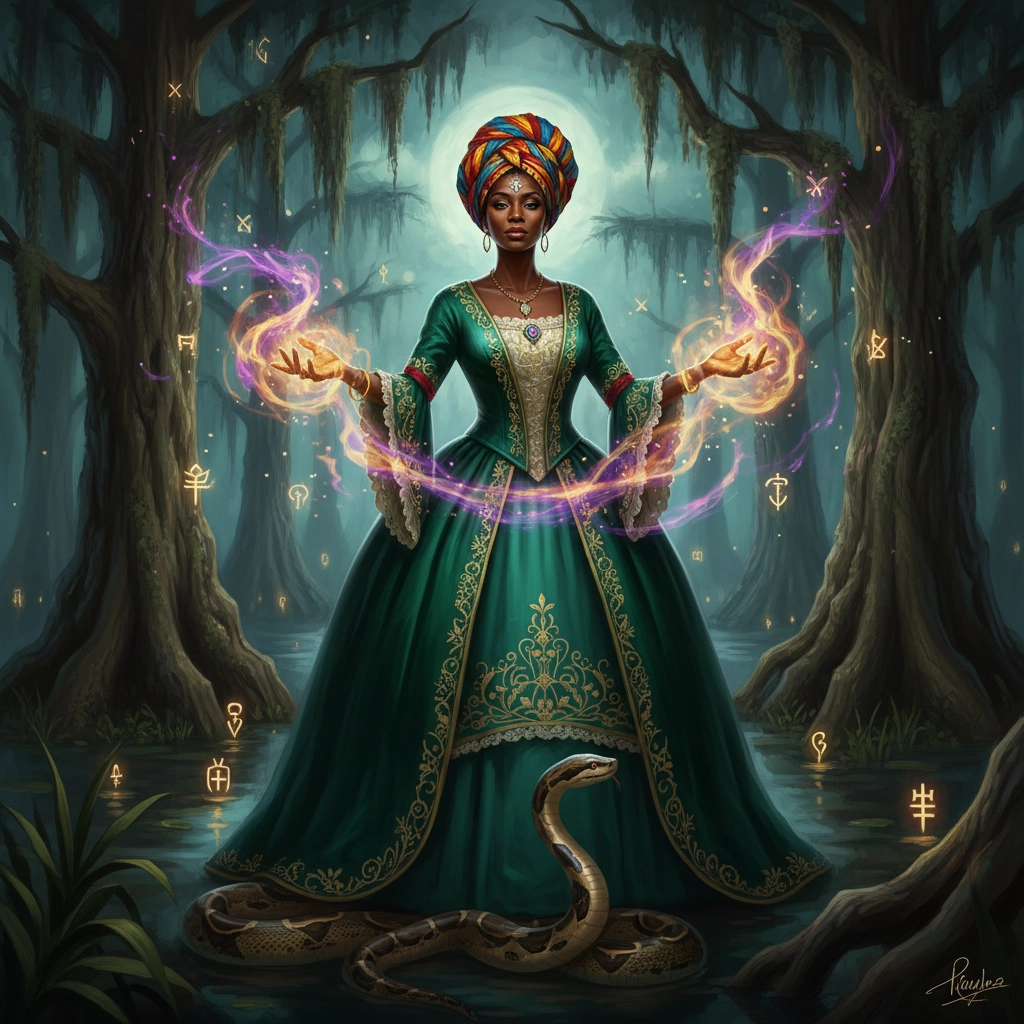
But here's what makes her legendary beyond the folklore: her information network. Laveau built a sophisticated system of informants throughout New Orleans society. When you know everyone's secrets, your "magic" becomes remarkably effective. She could predict outcomes, influence decisions, and protect her community because she understood that spiritual power and social intelligence are inseparable.
The stories of her magical abilities read like urban legends: making police officers spin in circles, turning arresting officers into barking dogs, putting entire police stations to sleep with her altar work. Whether you believe in the supernatural elements or not, the message was clear: this woman was not to be underestimated.
Black Herman: The Migration Magician
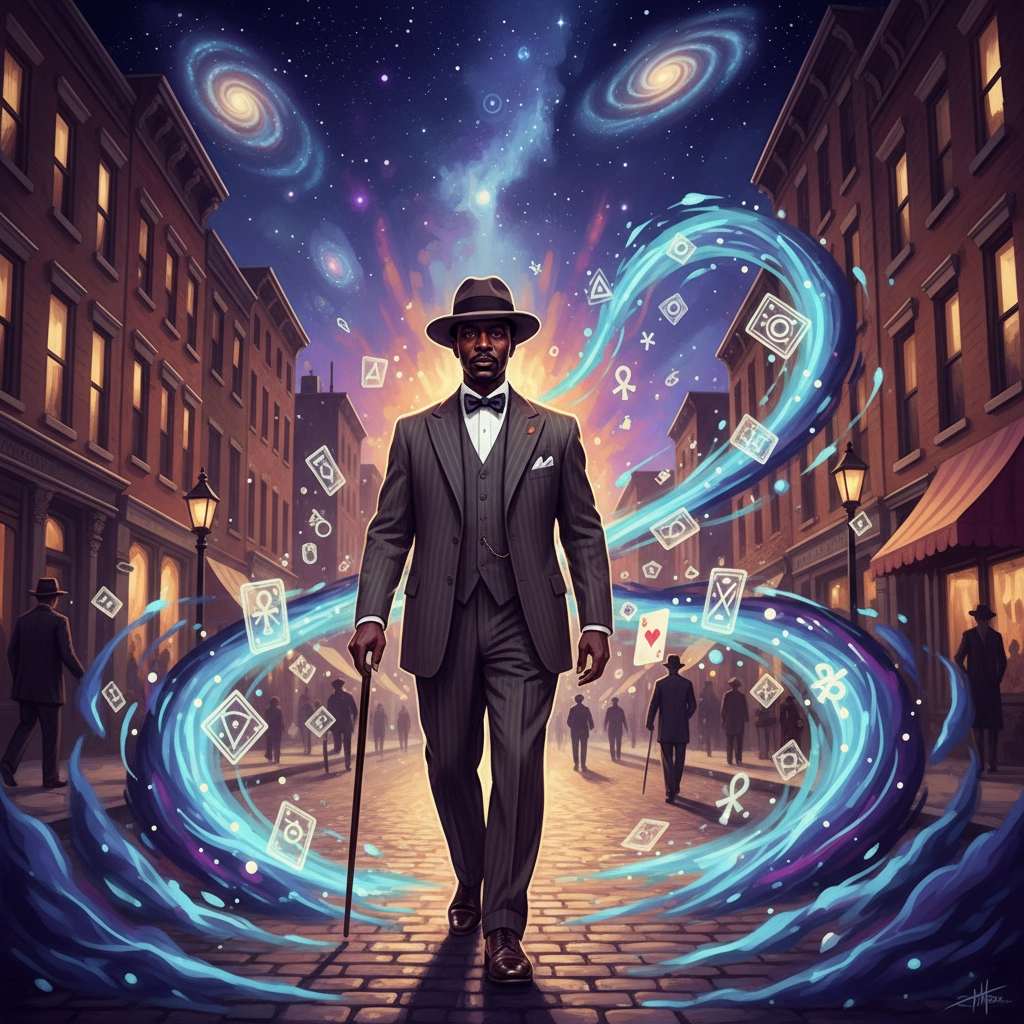
Benjamin Rucker understood something crucial about hoodoo: it needed to travel. Born in Virginia in 1892, he learned both stage magic and rootwork from Prince Herman, then took his teacher's name and carried hoodoo into the modern era.
As African Americans moved north during the Great Migration, they carried their spiritual traditions with them. Black Herman saw this cultural shift and built his practice around it, traveling between the South and northern cities, providing conjure services wherever Black communities were establishing themselves.
When Jim Crow laws tightened their grip on the South, Black Herman didn't retreat: he adapted. He established his hoodoo business in Harlem, creating a spiritual anchor for displaced communities. He provided card readings, health tonics, and rootwork services that helped people maintain their connection to ancestral wisdom even in completely new environments.
Black Herman proved that hoodoo wasn't just a regional practice: it was a portable system of power that could adapt to any circumstances.
Doc Buzzard: Breaking the Color Line
Here's where things get interesting. The most famous Doc Buzzard was white. In a tradition rooted in African wisdom and forged in the resistance to white supremacy, this South Carolina root doctor became one of the most sought-after practitioners of his era.
This challenges every assumption about who gets to practice what kind of magic. Doc Buzzard wasn't appropriating: he was participating in a spiritual ecosystem that transcended racial boundaries in ways that official society never could. His reputation for powerful cures and magical work spread throughout the lowcountry, proving that hoodoo judged practitioners by their abilities, not their ancestry.
The name "Doc Buzzard" became a title passed down to multiple practitioners, creating a lineage that lasted generations. This wasn't about individual fame: it was about maintaining a spiritual office that served the community's needs.
Sheriff James McTeer: When Law Meets Lore
Talk about contradictions: a law enforcement officer who was also a gifted hoodoo practitioner. James McTeer represented the complex realities of Southern spiritual life, where official roles and magical abilities often coexisted in surprising ways.
McTeer became famous for his "psychic war" with one of the later Doc Buzzard practitioners, a conflict that ended tragically but led to an unexpected friendship. This wasn't just personal drama: it was a clash between different approaches to spiritual authority in changing times.
Unlike practitioners focused on commercial hoodoo products, McTeer was gifted in his own way, though less interested in the manufactured aspects of the tradition. His story shows how hoodoo operated across social boundaries, creating relationships and conflicts that official society couldn't easily categorize.
Henri Gamache: The Mystery Writer Who Changed Everything
Sometimes the most influential people are the ones you never see. Henri Gamache was a pseudonym, but the impact of his writings on modern hoodoo practice is undeniable.
"The Master Book of Candle Burning" didn't just document candle magic: it systematized it. Gamache's "Philosophy of Fire" became foundational to conjure candle rituals, while his psalm-based workings connected hoodoo to broader spiritual traditions.
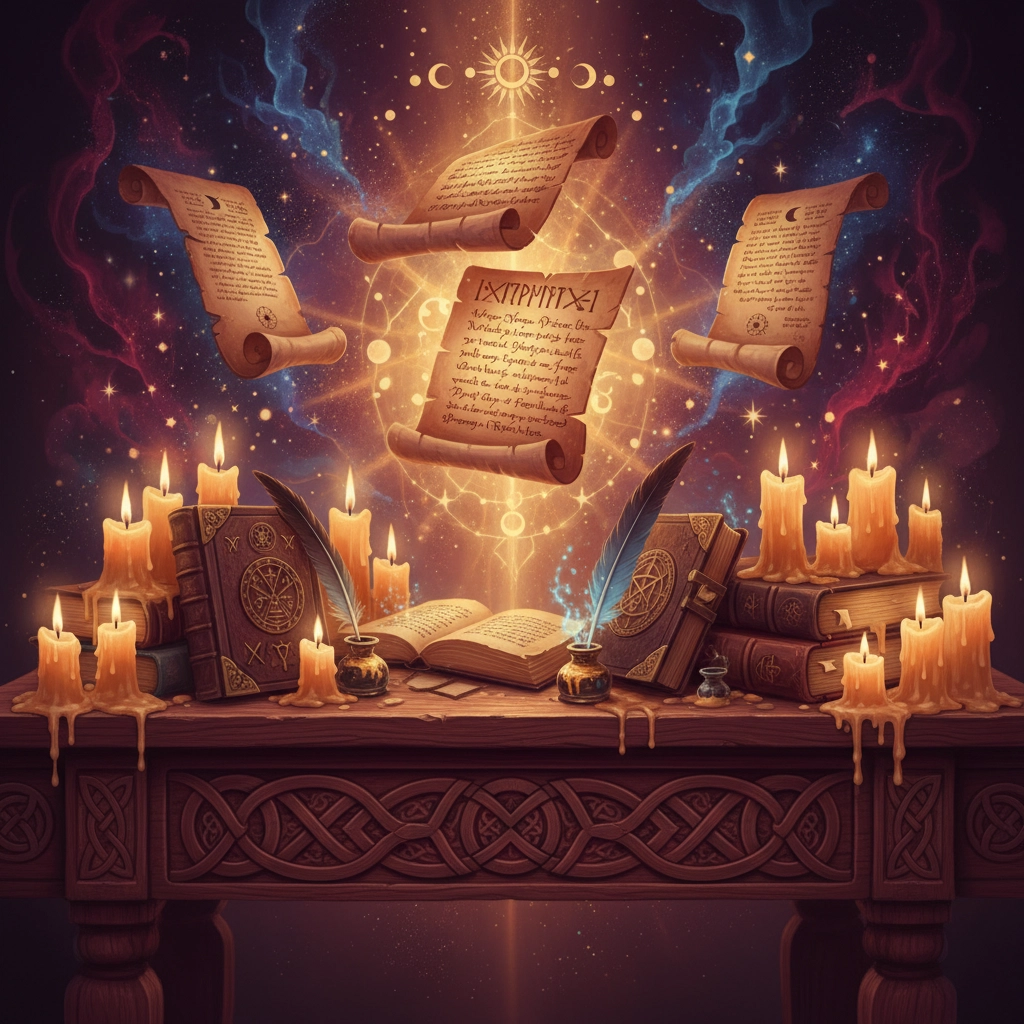
His other texts: "Terrors of the Evil Eye Exposed" and "Mystery of the Long Lost 8th, 9th, and 10th Books of Moses": helped bridge folk practice and scholarly documentation. We still don't know who Henri Gamache really was, but their legacy lives in every candle burned with intention, every psalm spoken for protection.
Aunt Caroline Dye: The Arkansas Oracle
Living to 108 years old in an era when that was practically miraculous, Aunt Caroline Dye became legendary for more than just longevity. She was renowned as a great jinx-breaker, the kind of practitioner people traveled hundreds of miles to consult.
Her reputation was so widespread that blues musicians wrote songs about her. In a tradition where music and magic intertwined, having blues artists celebrate your work meant your influence had reached every corner of African American culture.
Dye represented the rural roots of hoodoo: the deep connection to land, plants, and community rhythms that urban practitioners sometimes lost. Her legend reminds us that the most powerful magic often comes from the most unexpected places.
The Memphis Magic Scene
Memphis, Tennessee wasn't just a city with hoodoo practitioners: it was a hoodoo capital. The concentration of rootworkers and conjurers was so significant that it attracted serious scholarly attention, becoming a key research site for understanding American folk magic.
Doctor Scissors of Beale Street and Uncle Dub were just two of the many practitioners who made Memphis synonymous with spiritual power. The city's connection to music, migration, and magic created a unique cultural ecosystem where hoodoo flourished openly.
Even sports teams referenced Memphis's magical reputation, with opposing coaches claiming local teams could "jinx" their opponents. This wasn't just folklore: it was cultural branding at its most effective.
Why These Stories Matter Today
These legendary figures weren't just practicing magic: they were preserving wisdom, building community, and creating resistance networks that sustained entire populations through impossible circumstances. They turned spiritual practice into social power, individual gifts into collective strength.
Their stories remind us that hoodoo has always been about more than spells and rituals. It's about maintaining connection to ancestral wisdom, adapting to changing circumstances, and using spiritual practices to navigate real-world challenges.
These legends didn't just preserve tradition: they evolved it, ensuring that ancient wisdom stayed relevant to contemporary needs. That's the real magic worth remembering.

