

What if everything you thought you knew about spiritual candles was sanitized, commercialized, and stripped of its raw power?
Before the age of pristine soy wax and Instagram-worthy spell setups, rootworkers crafted their spiritual tools from materials that carried the very essence of life and death. These weren't just candles: they were vessels of ancestral wisdom, made from animal fat, tree nut wax, and pure intention.
The Raw Truth About Traditional Tallow Candles
Long before spiritual supply stores lined their shelves with color-coded candles, Hoodoo practitioners rendered their own tallow from cattle, sheep, pigs, and oxen. This wasn't a choice: it was necessity born from resourcefulness, and that necessity created something far more powerful than modern alternatives.
Tallow candles possessed an unrefined authenticity that connected practitioners directly to the source of their power. When you lit a candle made from animal fat, you weren't just creating light; you were releasing the life force of the animal back into the spiritual realm. The fatty acids: stearic, oleic, and palmitic: didn't just burn; they transformed, carrying prayers and intentions on aromatic wings of smoke.

These candles demanded respect. They were messy, smoky, and filled ritual spaces with what some described as "the smell of unwholesome sheep." But here's what modern practitioners miss: that rawness was the point. The candle retained its bodily origins, staying "too embodied" for polite company but perfect for serious spiritual work.
Why "Messy" Meant Magical
The characteristics that made tallow candles challenging for everyday use made them powerful for rootwork. As the temperature rose during burning, volatile compounds intensified the scent and, from a magical perspective, amplified the candle's spiritual influence. The soot and smoke weren't imperfections: they were active participants in the transformation happening during ritual.
Think about it: when you're trying to break hexes, cleanse spaces, or protect against harm, do you really want a candle that burns "clean" and disappears without a trace? Our ancestors understood that spiritual work required materials willing to get dirty, to leave their mark, to announce their presence boldly.
The smoke carried intentions skyward while the melting fat dispersed into the air, creating what practitioners recognized as an active spiritual presence filling the ritual space. This wasn't background ambiance: this was power made manifest.
The Hidden Tradition of Tree Nut Wax
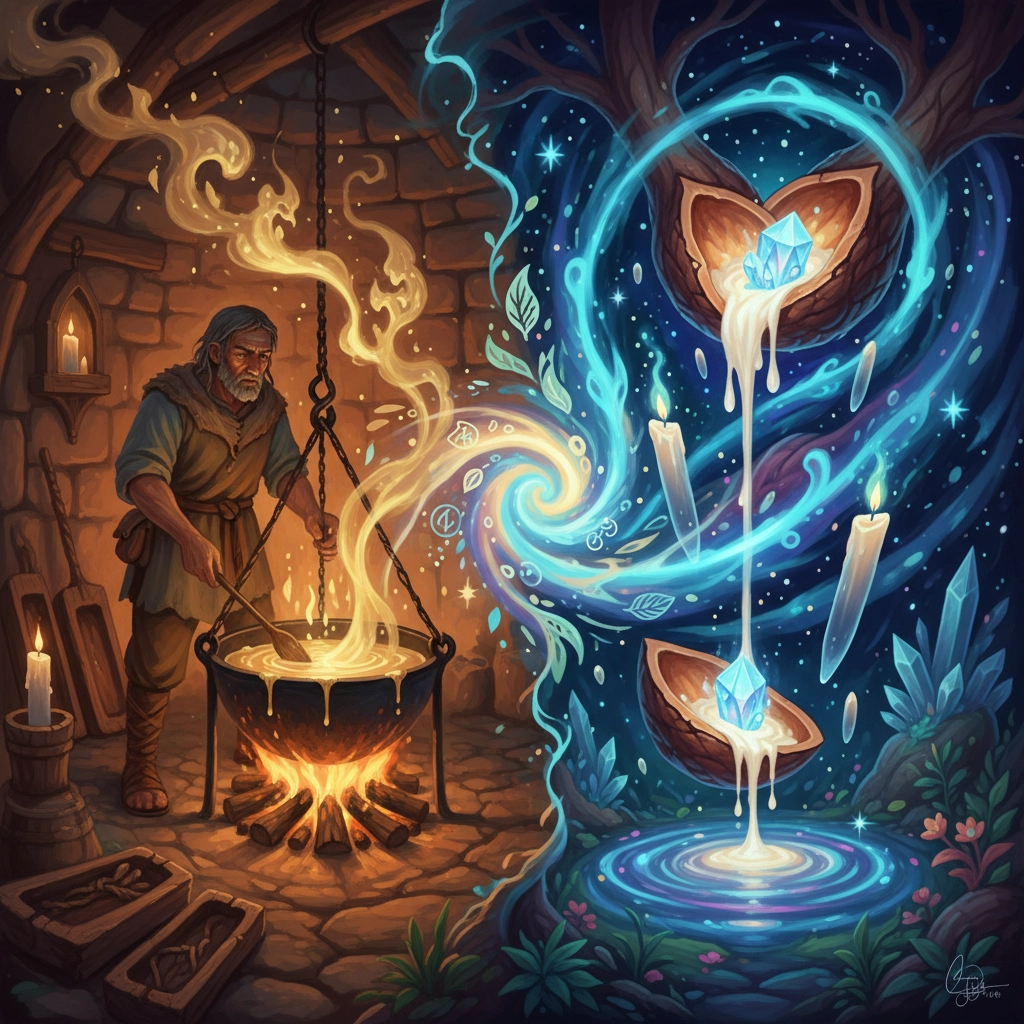
Beyond animal fat, traditional candle crafters in various cultures extracted wax from tree nuts, particularly in Eastern practices that influenced American rootwork. This plant-based alternative provided another bridge between the natural world and spiritual practice, offering practitioners who couldn't access animal fat a way to maintain that crucial connection to unprocessed materials.
The tree nut wax tradition reminds us that old school Hoodoo was never rigid in its requirements. Practitioners worked with what the land provided, what their circumstances allowed, and what their spirits guided them toward. Whether animal fat or tree nut wax, the principle remained the same: authenticity over aesthetics, power over prettiness.
How Temperature Activated Spiritual Potency
Temperature wasn't just a byproduct of burning: it was a spiritual technology. As tallow candles heated, they released their volatile compounds in waves, creating layers of aromatic intensity that corresponded to different phases of magical work. The initial lighting brought forth one set of scents and energies, while sustained burning revealed deeper, more complex spiritual signatures.
This relationship between heat and spiritual activation meant that longer rituals naturally intensified in power. The candle wasn't just providing light for your work; it was actively participating in the transformation, growing stronger as the ceremony progressed.
Rootworkers learned to read these changes, understanding that a candle's behavior during burning offered insights into the work's progress. The way the fat melted, how the smoke moved, even the quality of the soot: all became part of the divination system embedded in the very tools of practice.
The Purity Principle in Old School Practice
"The purer the ingredients used in candle making, the more powerful practitioners considered the resulting magical tool." This principle explains why tallow candles, despite their challenging characteristics, held such revered positions in traditional rootwork.
Modern processing strips materials of their spiritual signatures, creating uniform products that burn predictably but lack the vital essence that made traditional candles powerful. Tallow candles maintained an unbroken chain of material authenticity from living animal to spiritual tool, preserving the life force that commercial waxes simply cannot replicate.
This purity wasn't about cleanliness in the sanitized sense: it was about remaining true to source, about maintaining the connection between the material and its origins. When you worked with a tallow candle, you worked with death transformed into light, with sacrifice made sacred, with the very essence of life continuing its journey through your spiritual practice.
Reading the Messages in Smoke and Soot

The smoke patterns from animal fat candles told stories that clean-burning alternatives never could. Thick, aromatic clouds carried specific meanings based on their direction, density, and behavior. Soot deposits left messages on glass holders, creating a form of ceromancy: candle divination: that revealed the spiritual dynamics at work during ritual.
These weren't inconveniences to clean up afterward; they were the candle's way of communicating about the work being done. A candle that left heavy soot might indicate the presence of negative influences being cleared. Smoke that moved in unusual patterns could signal spiritual allies joining the work or obstacles requiring additional attention.
Connecting with Ancestral Wisdom Today
Modern Hoodoo practitioners don't need to abandon contemporary conveniences entirely, but understanding these traditional methods opens doorways to deeper spiritual connection. When we appreciate why our ancestors valued the raw, unrefined nature of tallow candles, we gain insights into the principles that made their spiritual work so effective.
The animal fat candles of earlier generations represented a form of spiritual technology born from necessity, resourcefulness, and profound respect for natural materials in their most unprocessed forms. They remind us that sometimes the most powerful spiritual tools are the ones that demand the most from us: that ask us to work with their imperfections, to embrace their rawness, and to find power in their unpolished authenticity.

Whether you choose to work with traditional tallow candles or modern alternatives, carrying forward this understanding of material authenticity and spiritual connection honors the wisdom of rootworkers who built powerful practices with whatever the world provided them. Their legacy isn't just in the techniques they passed down, but in the principles that guided their choices: authenticity over convenience, connection over comfort, and spiritual power over social acceptability.
The old school Hoodoo candle wasn't just a tool: it was a teacher, showing practitioners that real power often comes wrapped in humble, imperfect, beautifully raw packages that demand our full attention and respect.

