

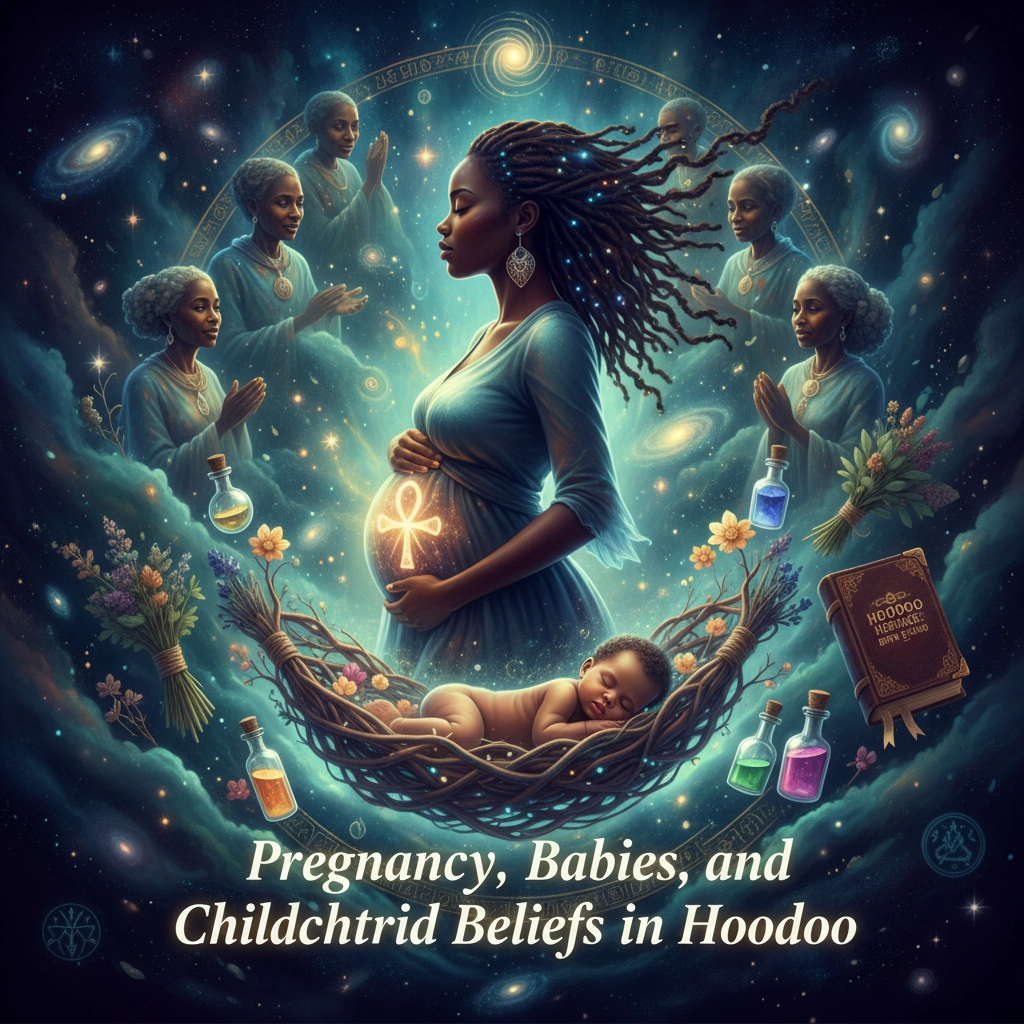
Think pregnancy is just about baby booties and nursery colors? Think again. In the rich tapestry of Hoodoo tradition, pregnancy and childbirth represent some of the most spiritually charged moments in human experience: times when the veil between worlds grows thin and protection becomes paramount.
For generations, African American midwives understood something that modern medicine often overlooks: bringing new life into this world isn't just a physical process. It's a profound spiritual journey that requires careful navigation through unseen realms, protective rituals, and deep ancestral wisdom.
When the Belly Shows, the Eye Follows
Here's something that might surprise you: in Hoodoo tradition, that beautiful pregnant glow comes with a spiritual price tag. As a woman's belly grows and becomes more prominent, she becomes increasingly vulnerable to the Evil Eye: those jealous or malevolent gazes that can cause harm from a distance.
The extending belly acts like a beacon, drawing unwanted spiritual attention from those who might wish harm upon mother or child. This isn't superstition: it's spiritual reality recognized by practitioners who understood the delicate balance between the seen and unseen worlds.

To combat this vulnerability, pregnant women in Hoodoo communities wore eye amulets: protective charms designed to deflect harmful spiritual energy. These weren't just decorative pieces; they were spiritual shields crafted with specific intentions and blessed through ritual practice.
But protection went beyond just wearing the right charm. Even a pregnant woman's own gaze carried power and responsibility. Whatever she looked at for extended periods was believed to directly influence her developing baby. This understanding led to the practice of surrounding expectant mothers with sacred images, positive symbols, and uplifting environments that would spiritually nurture the child even before birth.
The Sacred Role of Hoodoo Midwives
Picture this: a woman in labor, surrounded not just by medical care but by spiritual warriors who understood that birthing a child meant navigating one of life's most dangerous spiritual crossroads. African American midwives weren't just healthcare providers: they were spiritual guardians who combined practical midwifery skills with deep Hoodoo knowledge.
These remarkable women served their communities both during and after slavery, providing essential care when segregation laws blocked Black women from white hospitals. But their role extended far beyond the physical. They recognized that the birthing chamber was equivalent to the crossroads at midnight: a liminal space where spirits gathered, some seeking to help and others looking for opportunities to cause mischief.
The midwife's spiritual preparation began long before labor started. She would place protective charms both inside and outside the house, creating multiple layers of spiritual defense. Prayers for protection weren't optional extras: they were as essential as sterilizing instruments or monitoring the baby's position.

The Ultimate Magical Threshold
What if I told you that childbirth represents the most powerful magical moment most of us will ever witness? In Hoodoo understanding, birth is the ultimate magical threshold: a moment when a soul crosses from the spirit world into physical existence, bringing with it incredible vulnerability and primal power.
This threshold attracts spiritual attention from multiple realms. Benevolent ancestors might gather to welcome the new soul, while malevolent spirits see opportunity in the chaos and vulnerability of birth. The birthing process becomes a spiritual battleground where the right protections can mean the difference between blessing and curse.
Magic spells during this time serve crucial purposes: easing the mother's pain, speeding safe delivery, protecting against harmful spirits, and ensuring a positive future for both mother and child. These weren't desperate measures: they were sophisticated spiritual technologies developed over generations of practice.
Special ritual clothing and amulets designed specifically for childbirth channeled protective energies. Every element in the birthing space was considered for its spiritual impact, creating an environment where the sacred act of birth could unfold under divine protection.
Sacred Materials, Sacred Responsibilities
Here's where Hoodoo tradition reveals its profound understanding of spiritual interconnectedness: the biological materials from birth: the umbilical cord (called the "navel string") and the afterbirth: carried immense spiritual significance that demanded careful ritual treatment.
These weren't just medical waste to be discarded. They were sacred materials that maintained spiritual connections between mother, child, and the creative forces of the universe. Midwives understood that how these materials were handled would determine whether the mother could conceive again.
The "navel string" and afterbirth were either burned or buried according to specific protocols passed down through generations. Proper handling ensured fertility; improper treatment could render a woman unable to have more children. This wasn't symbolic: it was believed to be literal spiritual cause and effect.
The burial or burning became a sacred ceremony in itself, often involving specific prayers, timing, and location requirements. Some traditions called for burying these materials under fruit trees to ensure the family's continued abundance, while others required burning at specific times to release the spiritual energy appropriately.
Protecting the Most Vulnerable
Newborns in Hoodoo tradition are understood to exist in a state of extreme psychic vulnerability: more susceptible to spiritual influences than at any other time in their lives. Having just crossed from the spirit world, they remain partially connected to that realm, making them extraordinarily sensitive to both positive and negative spiritual energies.
This vulnerability was historically considered even more dangerous than physical threats. A baby might survive difficult physical conditions but suffer lasting spiritual damage from negative influences encountered in those crucial early days and weeks.
Protective amulets for newborns weren't optional accessories: they were spiritual necessities. These charms were crafted specifically to address the unique vulnerabilities of souls who had just incarnated, providing a protective buffer while the child's own spiritual defenses developed.

The mother, too, remained in a spiritually sensitive state during the postpartum period. Having served as the doorway between worlds, she needed continued protection and spiritual support as her own energy rebalanced and healed from the profound experience of bringing life into the world.
Beyond Superstition: Spiritual Technology
What modern observers might dismiss as "old wives' tales" or "superstitions" were actually sophisticated spiritual technologies developed by communities who understood the hidden dimensions of human experience. These practices emerged from the integration of Central African spiritual beliefs, particularly those of the Bakongo people, with the practical wisdom gained through generations of midwifery practice.
The beautiful thing about Hoodoo childbirth traditions is how they honored both the physical and spiritual aspects of birth without creating false divisions between them. Medical knowledge and spiritual protection worked hand in hand, creating a holistic approach that addressed the complete human experience of bringing new life into the world.
These traditions recognized profound truths that modern medicine is only beginning to understand: that emotional and spiritual states during pregnancy and birth have real impacts on outcomes, that the environment and energy surrounding birth matter deeply, and that the transition into parenthood requires support that goes beyond the purely physical.
Living Wisdom for Modern Times
Today, as more people seek holistic approaches to pregnancy and childbirth, these ancient Hoodoo traditions offer valuable insights. They remind us that birth is indeed a sacred threshold deserving of reverence, protection, and spiritual attention.
The practices of surrounding pregnancy with positive energy, creating protective environments for birth, treating the birthing process as sacred, and recognizing the spiritual vulnerability of both mother and newborn contain wisdom that transcends cultural boundaries.
Whether you practice Hoodoo or simply seek to honor the profound mystery of new life, these traditions invite us to approach pregnancy and childbirth with the reverence they deserve: not just as medical events, but as sacred passages that connect us to the deepest mysteries of existence.
The ancestral wisdom lives on, reminding us that bringing life into this world has always been, and will always be, both deeply practical and profoundly sacred work.

