

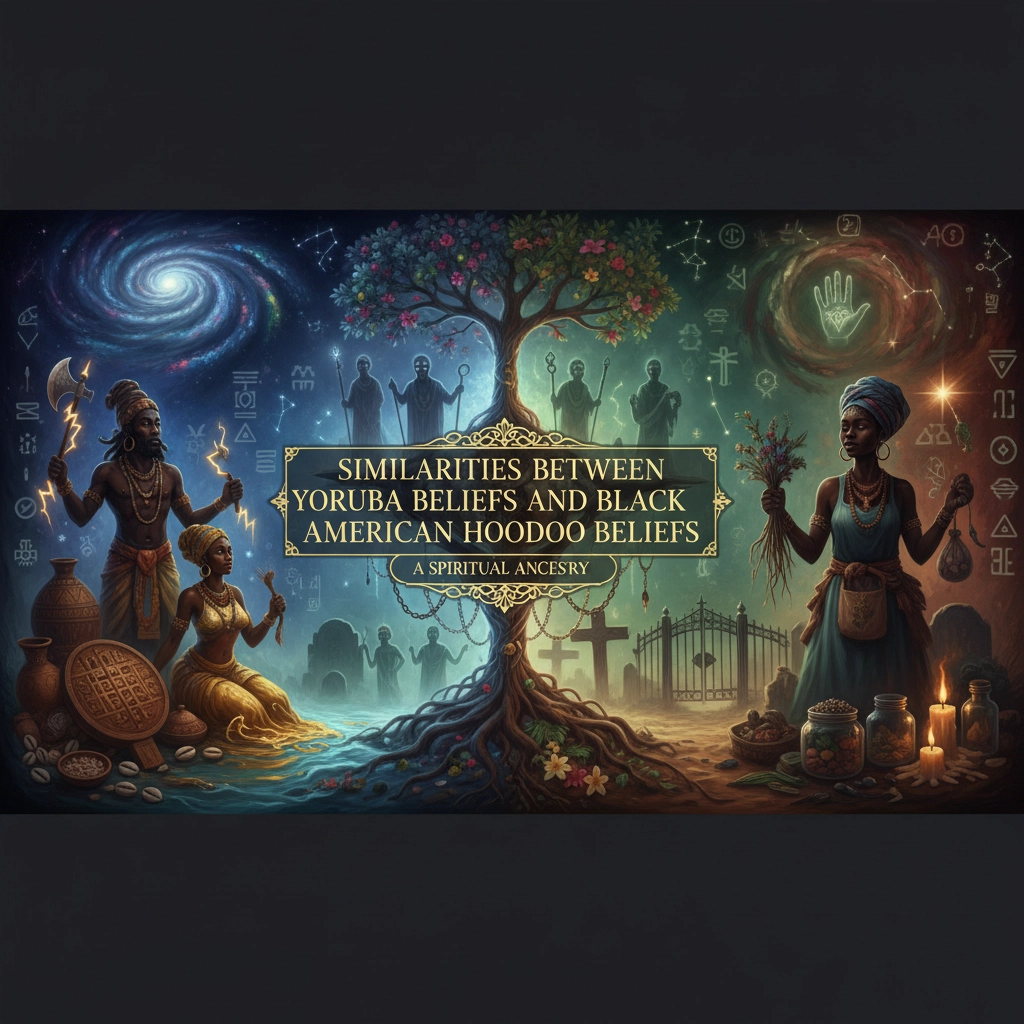
What if the most powerful spiritual traditions in America weren't born here at all, but survived an ocean crossing that was meant to destroy them? What if the enslaved Africans who built this nation didn't just bring their bodies and labor: they brought entire cosmologies, complete spiritual systems that would reshape American spirituality forever?
The truth is breathtaking: Black American Hoodoo isn't some isolated folk practice that emerged from nowhere. It's the living, breathing descendant of one of West Africa's most sophisticated spiritual traditions: the Yoruba belief system. Despite centuries of suppression, forced conversion, and cultural erasure, the sacred knowledge survived, adapted, and thrived.
The Sacred Survived What History Tried to Destroy
Picture this: millions of West Africans, torn from their homelands, forbidden to speak their languages, forced to abandon their gods. Yet somehow, the sacred crossroads spirit lived on. The power of thunder still commanded respect. Iron still held mystical properties. The ancestors still whispered guidance to those who knew how to listen.
This isn't coincidence: it's testament to the incredible resilience of spiritual truth. When enslaved Yoruba people arrived in the Americas, they didn't just abandon their beliefs. They transformed them, disguised them, and wove them into new forms that could survive under the watchful eyes of slaveholders.
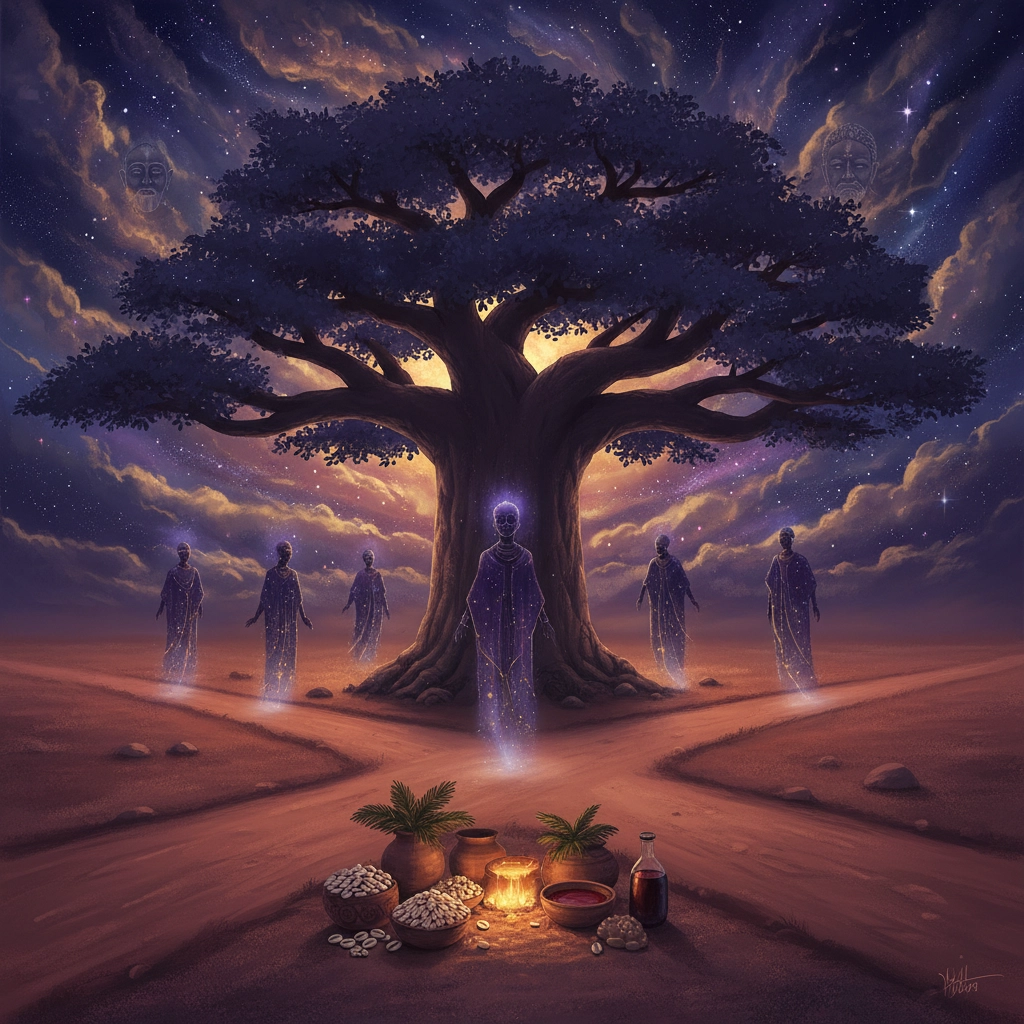
Where Worlds Collide: The Sacred Crossroads Connection
Here's where it gets fascinating. In Yorubaland, every crossroads belongs to Exu-Elegba, the divine trickster who controls all communication between humans and spirits. Yoruba people leave offerings at these intersections, understanding that crossroads are portals where worlds meet and magic happens.
Fast forward to the American South, and what do we find? Hoodoo practitioners gathering at crossroads under cover of darkness, leaving offerings for the "Man of the Crossroads." The name Exu-Elegba disappeared during slavery, but the practice? It not only survived: it became foundational to American folk magic.
Think about the profound spiritual intelligence this represents. When you can't say the name of your god, you don't abandon the god: you find new ways to honor the sacred relationship. The crossroads spirit simply took on new forms while maintaining its essential power.
When Thunder Speaks, Both Traditions Listen
The Yoruba deity Shango commands thunder and lightning with fearsome power. In traditional Yoruba communities, Shango's voice through storms demands respect, reverence, and sometimes, protective action. This wasn't some primitive superstition: it was sophisticated spiritual technology for relating to natural forces.
During the brutal Middle Passage and plantation slavery, the name Shango was lost. But something remarkable happened: the reverence for thunder and lightning became even more embedded in African American spiritual life. In Hoodoo, thunder signals divine displeasure, and anything struck by lightning carries tremendous spiritual power.
Archaeological evidence at Maryland's Wye House revealed spiritual bundles containing stone axes: artifacts that researchers connect directly to Shango worship. Four feet below street level in Annapolis, archaeologists discovered Hoodoo spiritual bundles with axes and iron implements, proving that centuries later, the thunder god's influence still protected and empowered his people.
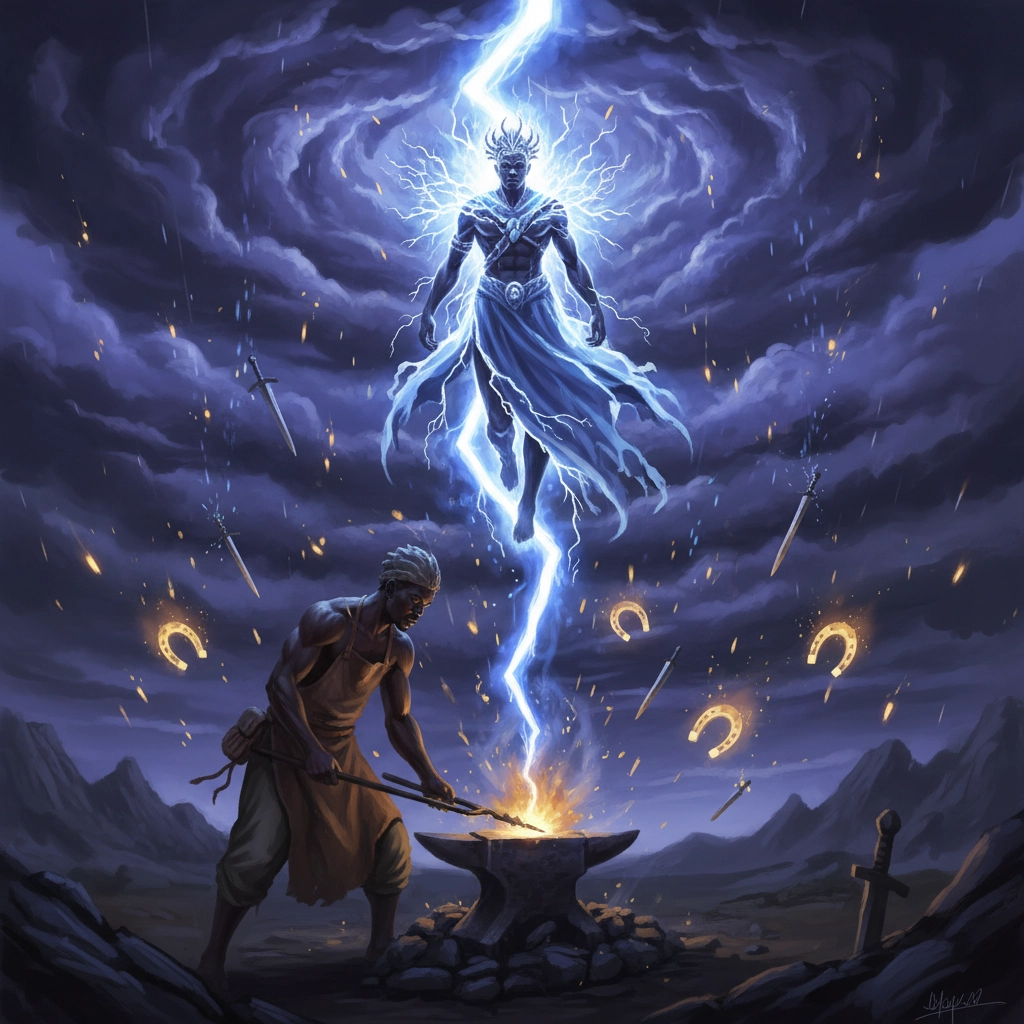
The Blacksmith's Sacred Knowledge Lives On
In Yorubaland, blacksmiths weren't just craftsmen: they were spiritual intermediaries who worked with Ogun, the orisha of iron and technology. Their relationship with metal was sacred, their knowledge both practical and mystical.
This profound respect for iron and metalwork crossed the Atlantic intact. On American plantations, enslaved and free Black people continued to hold blacksmiths in special regard. But here's the beautiful adaptation: when traditional Yoruba iron rituals became impossible, Hoodoo practitioners transformed the practice. Horseshoes became protective talismans. Nails in spiritual bundles channeled Ogun's protective force. Railroad spikes buried at property corners created spiritual boundaries.
The orisha's name might have been forgotten, but his power lived on in every piece of iron used for protection, every nail driven with spiritual intention, every horseshoe hung for luck.
Ancestors Never Die: They Just Change Address
Both Yoruba tradition and Hoodoo understand a fundamental truth: death doesn't end relationships with loved ones. In Yorubaland, ancestor veneration forms the backbone of spiritual practice. Families maintain altars, make offerings, and seek guidance from those who've transitioned.
Hoodoo preserved this sacred knowledge with remarkable consistency. Despite Christianity's attempts to redirect African Americans toward European spiritual models, ancestor reverence remained central. Hoodoo practitioners continued making offerings to deceased family members, seeking their protection and wisdom, understanding that the ancestors remained active forces in the lives of their descendants.
This isn't just sentimental remembrance: it's practical spirituality. Both traditions recognize that those who've crossed over possess knowledge and power that can benefit the living. The ancestors become allies, protectors, and guides for navigating both spiritual and material challenges.
When Spirits Mount Their Horses
Spirit possession in both traditions reveals sophisticated understanding of consciousness and divine communication. In Yoruba ceremonies, orishas "mount" devotees, temporarily taking control of their bodies to deliver messages, perform healings, and provide guidance. This isn't considered loss of control: it's sacred partnership with divine forces.
Hoodoo maintained these possession practices, understanding that direct spirit communication provides access to knowledge unavailable through ordinary consciousness. While the specific names of orishas might have been lost, the technology of spirit mounting survived, allowing Hoodoo practitioners to receive guidance, prophecy, and healing power through divine possession.
The Root of All Healing: Sacred Botanical Knowledge
Walk through any traditional Yoruba healing ceremony, and you'll witness sophisticated use of plants, roots, and herbs for both physical and spiritual healing. This knowledge represents generations of accumulated wisdom about how plants channel divine energy and influence human well-being.
Hoodoo's famous "rootwork" directly descends from this Yoruba botanical mastery. Enslaved Africans brought not just knowledge of which plants heal specific ailments, but understanding of how herbs connect practitioners to spiritual forces. Root doctors in the American South maintained this dual approach: healing the body while addressing spiritual imbalances that might cause illness.
The continuity is remarkable: both traditions understand plants as allies, teachers, and channels for divine healing energy. Whether in Nigeria or North Carolina, practitioners approach herbs with reverence, knowing they're working with living spiritual forces.
Sacred Circles Still Turn
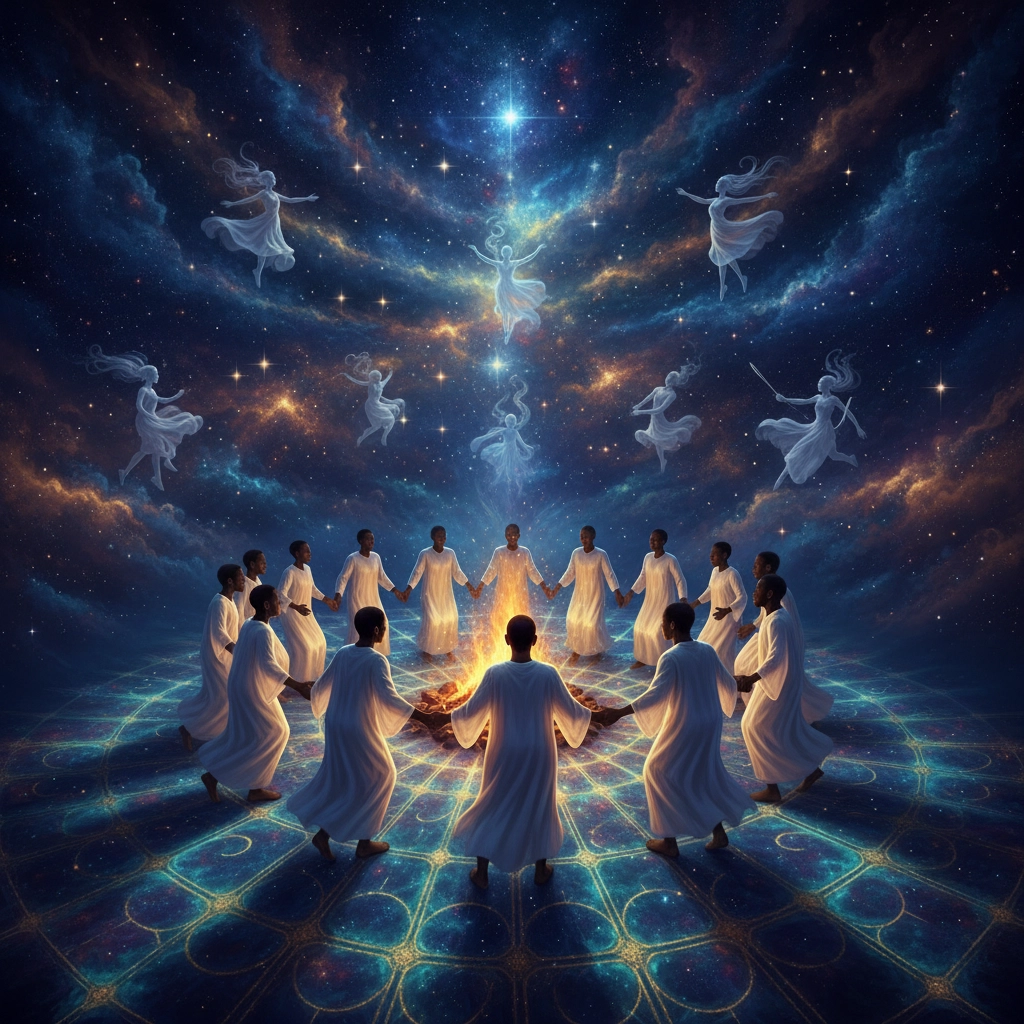
The Ring Shout: counterclockwise circle dancing accompanied by call-and-response singing: survived slavery to become a cornerstone of African American spiritual expression. This wasn't entertainment; it was technology for raising spiritual energy and facilitating divine communication.
In Yorubaland, circular dances serve identical functions, creating sacred space where orishas can manifest and participants can access altered states of consciousness. The steps changed, the songs adapted to new languages, but the essential spiritual mechanics remained constant.
Water immersion ceremonies, another Yoruba practice, similarly transformed in Hoodoo contexts. Whether in sacred rivers in Nigeria or baptismal ceremonies in American streams, both traditions understand water as a medium for spiritual cleansing and transformation.
The Pattern That Reveals Everything
Here's what makes these similarities so profound: they reveal a pattern of cultural genius. When direct practice became impossible, Yoruba spiritual principles didn't disappear: they adapted, morphed, and found new expressions that could survive under oppressive conditions.
The crossroads spirit became the Man of the Crossroads. Thunder worship became reverence for lightning-struck objects. Iron ceremonies became horseshoe protection rituals. Orisha possession became spirit mounting in Hoodoo contexts.
This isn't cultural loss: it's cultural transformation that preserved essential spiritual truths across centuries of attempted destruction.

Why This Matters More Than Ever
Understanding these connections isn't just academic exercise: it's spiritual archaeology that reveals the incredible resilience of sacred knowledge. In our current moment, when so many people feel disconnected from authentic spiritual tradition, these parallels remind us that powerful practices don't just disappear. They adapt, survive, and continue serving those who need them.
Both Yoruba tradition and Hoodoo offer sophisticated approaches to working with spiritual forces, healing community trauma, and maintaining connection with divine wisdom. They provide practical tools for navigating challenging times while staying rooted in ancestral strength.
The survival of these practices proves that spiritual truth transcends historical circumstances. What serves human flourishing will find ways to persist, transform, and emerge stronger than ever.
The ancestors didn't just survive the Middle Passage: they brought their gods with them, disguised but undefeated. Today, we witness the fruits of their spiritual genius: living traditions that continue empowering communities, healing individuals, and connecting practitioners to forces larger than themselves.
That's not just cultural preservation; that's spiritual revolution in action.

