

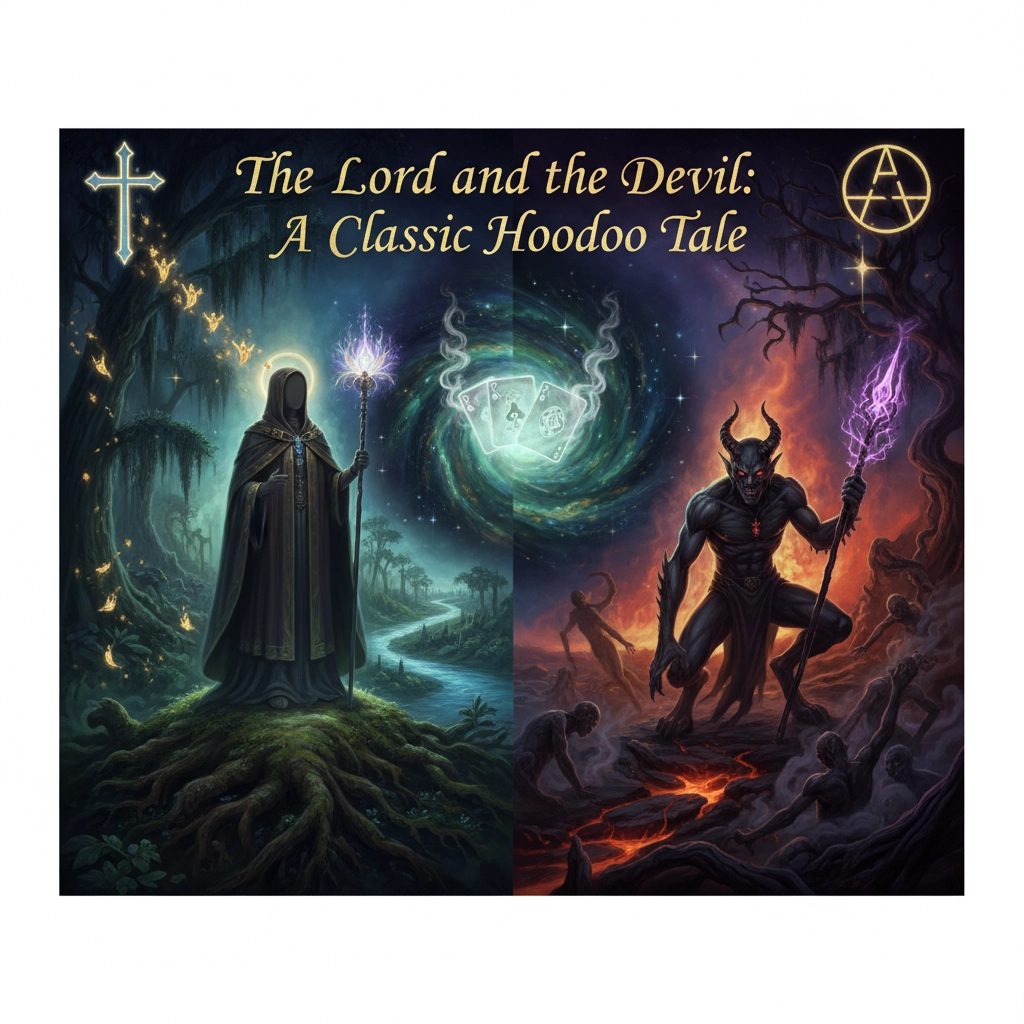
What if I told you that in the rich tapestry of American folk magic, the Devil isn't the villain you think he is? That in the world of Hoodoo, the cosmic battle between good and evil isn't quite so black and white?
Most people picture the Devil as Christianity's ultimate antagonist: a fallen angel bent on humanity's destruction. But step into the world of traditional Hoodoo, and you'll discover a far more complex character. Here, the Devil emerges not as pure evil incarnate, but as something far more intriguing: a cosmic trickster who plays by entirely different rules.
When Folklore Rewrites Theology
In the back roads of the American South, where African traditions merged with Christian beliefs and Indigenous wisdom, a different kind of spiritual story began taking shape. The enslaved communities who birthed Hoodoo didn't just adopt European Christianity wholesale: they transformed it, creating a theological landscape where the Devil could be bargained with, outwitted, and sometimes even befriended.
This wasn't heresy. This was survival wisdom wrapped in spiritual clothing.
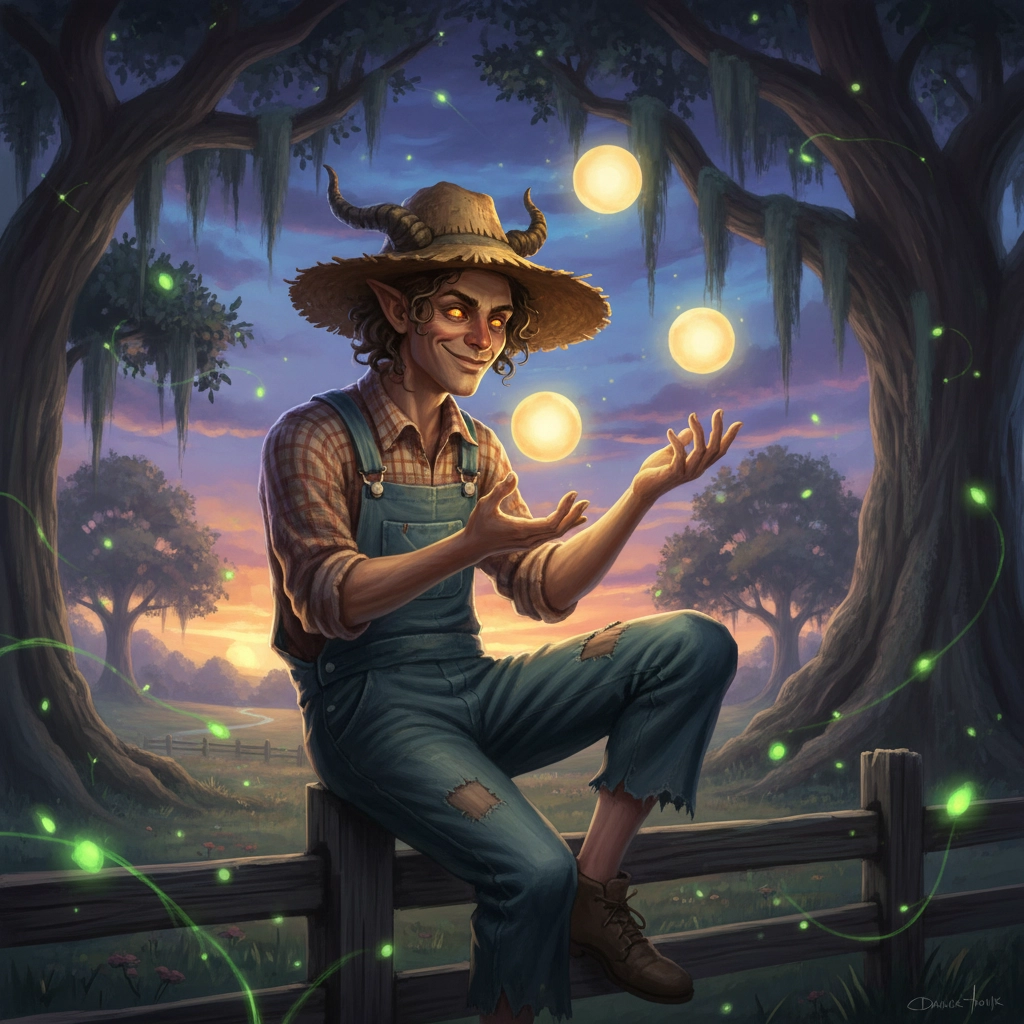
The Devil of Hoodoo folklore bears little resemblance to his fire-and-brimstone cousin. Instead, he's portrayed as a trickster figure: cunning, playful, and surprisingly relatable. He's the spiritual embodiment of humanity's capacity for both mischief and cleverness, testing individuals not through torment but through wit and temptation.
Think of him less as Lucifer and more like Anansi the spider or Coyote from Native American traditions: a figure who challenges the established order through cleverness rather than malice.
The Great Cosmic Game
But here's where Hoodoo folklore gets really interesting: God and the Devil aren't enemies locked in eternal warfare. They're competitors in a cosmic game.
In traditional Hoodoo tales, these two transcendent forces exist as equals, each with their own domain of influence and expertise. The Devil might grant knowledge of the past and present, while God holds dominion over the future. It's not about absolute good versus absolute evil: it's about different approaches to power and wisdom.
This theological framework challenges everything mainstream Christianity teaches about divine hierarchy. In Hoodoo folklore, the Devil "often competes successfully with God," representing a worldview where spiritual power is more fluid and negotiable than orthodox religion suggests.

Consider the famous tales of High John the Conqueror, where John regularly outwits both devils and masters through clever trickery. In these stories, divine figures aren't untouchable deities but characters who can be challenged, bargained with, and sometimes even beaten at their own games.
The Crossroads Where Worlds Meet
The most famous intersection of these two cosmic forces appears in crossroads magic: that legendary space where deals are struck and destinies decided. But even here, Hoodoo folklore subverts expectations.
While popular culture has sensationalized the idea of "selling your soul to the devil" at crossroads (think Robert Johnson), traditional Hoodoo practitioners understood something more nuanced. The crossroads wasn't just about making desperate bargains: it was about accessing liminal power, the spiritual energy that exists in spaces between worlds.
The Devil at the crossroads isn't necessarily malevolent. He's a spiritual broker, offering knowledge, skill, and power to those brave enough to meet him on equal terms. The key word here is equal: because in Hoodoo cosmology, humans aren't powerless supplicants before divine authority. They're active participants in a spiritual ecosystem.
Trickster Wisdom in Everyday Magic
This understanding of the Devil as trickster rather than tormentor shows up throughout Hoodoo practice. Practitioners might invoke diabolic energy not for evil purposes, but for protection, justice, or personal empowerment. The Devil becomes a spiritual ally for those who feel powerless: slaves seeking freedom, workers demanding fair treatment, lovers hoping to secure affection.

In the "John and the Devil's Daughter" tales, we see this relationship played out in surprisingly domestic terms. John doesn't just battle the Devil: he falls in love with his daughter, navigating supernatural romance with the same cunning he'd use to escape slavery. The Devil becomes not a cosmic enemy but a potential father-in-law, complete with all the complications that relationship entails.
These stories reveal something profound about African American spiritual resilience. When faced with a religious system that often portrayed them as cursed or inferior, enslaved communities created folklore that emphasized their own spiritual agency. If the Devil could be outwitted, if God could be bargained with, then no spiritual force: no matter how powerful: was beyond human influence.
The Devil You Know
What makes Hoodoo's Devil so compelling is his humanity. Unlike the abstract evil of theological texts, this Devil has personality, humor, and recognizable motivations. He's "personalized and made relatable, serving as a reflection of the human psyche" and our own capacity for both wisdom and foolishness.
This Devil doesn't tempt people toward damnation: he challenges them to be cleverer, braver, more resourceful. He's the spiritual representation of that voice that says, "Why accept limitations? Why not try a different approach?"
In many Hoodoo tales, interactions with the Devil become tests of character and intelligence rather than moral corruption. The individuals who succeed aren't necessarily the most righteous: they're the most clever, adaptable, and willing to think outside conventional spiritual boxes.
Revolutionary Theology
Understanding the Lord and Devil as equals in Hoodoo folklore reveals something revolutionary about African American spiritual consciousness. This isn't just colorful storytelling: it's theological resistance disguised as entertainment.
By portraying divine figures as fallible, negotiable, and sometimes outright beatable, these tales empowered communities who had every earthly reason to feel powerless. If High John could outwit the Devil, if clever humans could bargain with cosmic forces, then perhaps the seemingly impossible: freedom, justice, dignity: wasn't so impossible after all.
This theological framework also reflects a more complex understanding of power and morality than binary good-versus-evil thinking allows. The Devil's trickster nature suggests that challenges and difficulties aren't necessarily punishments or signs of divine displeasure: they might be tests, opportunities for growth, or simply the natural result of living in a complex world.
Modern Echoes of Ancient Wisdom
Today's Hoodoo practitioners continue drawing on this rich theological tradition, understanding that spiritual work often requires dancing with forces that mainstream religion might label "forbidden." The Devil remains a powerful ally for those seeking justice, protection, or personal transformation: not because he's evil, but because he represents spiritual approaches that conventional religion doesn't recognize.
This doesn't mean modern practitioners worship the Devil or reject divine goodness. Instead, they embrace a more nuanced understanding of spiritual power, recognizing that effectiveness sometimes requires working with energies that polite society prefers to ignore.
The Tale That Keeps Teaching
The Lord and the Devil of Hoodoo folklore ultimately tell us a story about human agency in the face of cosmic forces. They remind us that even the most powerful spiritual entities can be approached, negotiated with, and sometimes outwitted by clever humans who refuse to accept their limitations.
In a world where people often feel powerless before institutional authority: religious, political, or economic: these tales offer a different model. They suggest that all power, even cosmic power, operates through relationship and negotiation rather than absolute dominion.
The trickster Devil teaches us that challenges aren't always obstacles to overcome: sometimes they're invitations to become more creative, more resourceful, more fully ourselves. And the God who competes on equal terms with this cosmic trickster shows us that divine power itself might be more accessible and negotiable than we've been taught to believe.
This is the enduring magic of Hoodoo folklore: it transforms cosmic theology into practical wisdom, reminding us that in the great spiritual game, humans aren't just pawns( we're players with our own moves to make.)

