

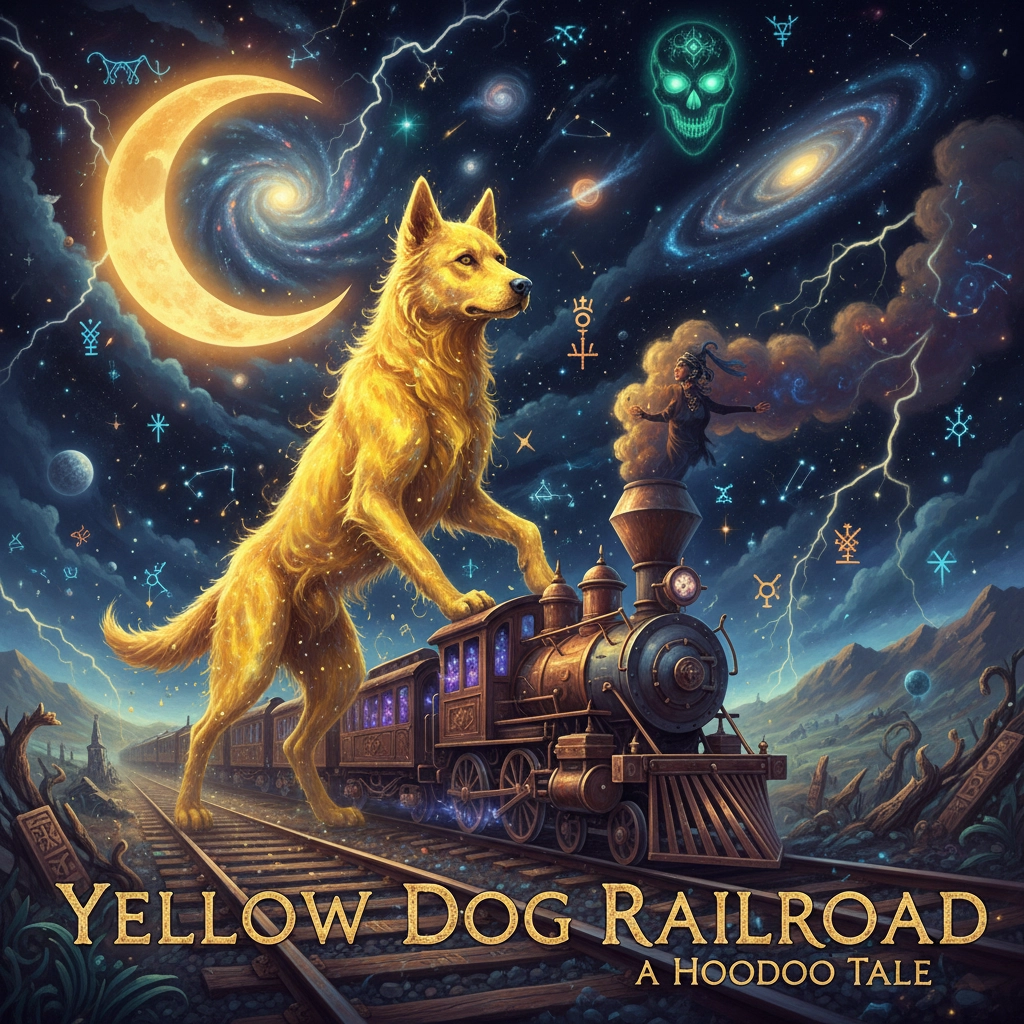
What if the rails that carried America's dreams also carried its deepest mysteries? In the heart of the Mississippi Delta and the bustling streets of Louisville, two tales of yellow dogs emerged in the early 1900s: one birthing the blues, the other striking fear into the hearts of believers. These aren't just stories about trains and animals; they're windows into a time when the supernatural walked alongside the mechanical, when folklore flowed as freely as the mighty Mississippi itself.
Where Music Meets the Rails: The Birth of a Legend
The Yazoo Delta Railroad didn't start out as legend: it began as necessity. Opening in August 1897, this humble 20.5-mile stretch between Moorhead and Ruleville, Mississippi, would become something far greater than its modest beginnings suggested. By 1900, it had been absorbed into the Yazoo & Mississippi Valley Railroad, extending its reach to Tutwiler and beyond, but its true destination was immortality.

How did a simple railroad line earn the nickname "Yellow Dog"? The most widely accepted story involves those two fateful letters: Y.D. When a curious stranger asked a railroad worker what the initials stood for, the worker drawled, "Yaller Dawg," and the name stuck like Delta mud on work boots. But historian Paul Oliver offers a more colorful alternative: that in Rome, Mississippi, the railroad was named after a mongrel hound that would bark a greeting to every passing train, as if blessing each journey with its wild song.
The magic happened at Moorhead, where the Southern Railroad crossed the Yellow Dog in what became one of America's most famous railroad junctions. It was here that W.C. Handy, wandering through the Delta night, heard an old man's haunting voice singing about "where the Southern cross the Yellow Dog." That moment: part accident, part destiny: moved Handy to begin developing what the world would come to know as the blues.
The Cursed Canine of Louisville: When Superstition Rides the Rails
But hundreds of miles away, another yellow dog was making headlines for entirely different reasons. In January 1907, Louisville, Kentucky's African American levee workers whispered fearfully about a yellow cur named "Rosenbaum": a dog that seemed to carry death in its shadow.

This wasn't just neighborhood gossip. Within two months, seven people reportedly died after the dog followed them through the streets. The stories grew darker with each telling: men dropping dead from sheer fright after spotting the beast, families fleeing their homes when it appeared at their doorsteps, workers refusing to show up if the dog wandered near the levee.
The newspapers of the time treated it as both sensational entertainment and genuine concern. Here was a community so steeped in hoodoo traditions that the appearance of a particular dog could shut down entire work sites. The Rosenbaum dog became Louisville's unofficial mascot of mortality: a four-legged harbinger that walked the line between folklore and fear.
When Rails and Rituals Intersect: The Deeper Current
These two yellow dog tales: one from Mississippi's musical heart, one from Kentucky's superstitious streets: reveal something profound about early 20th-century America. This was a time when the industrial revolution hadn't yet steamrolled over spiritual traditions, when railroads represented both progress and mystery, when a chance encounter with the right sound or sight could change the course of cultural history.

The railroad workers, levee hands, and Delta farmers who created these stories weren't just telling tales: they were weaving the fabric of American folklore. In their world, trains could carry blues inspiration as easily as cotton and coal, and a yellow dog could embody supernatural forces as real as the steam engines that powered their daily lives.
Consider how both stories center on crossings: literal and metaphorical. The Yellow Dog Railroad's fame comes from its intersection with the Southern line, a crossing that birthed musical revolution. The Louisville hoodoo dog represented another kind of crossing: the threshold between life and death, the natural and supernatural worlds walking the same city streets.
The Music of Memory: Why These Tales Still Matter
Big Bill Broonzy immortalized the railroad crossing in "The Southern Blues," but he was preserving more than just a catchy lyric. He was documenting a moment when America's soul was being forged in Delta heat and railroad steel. The Yellow Dog Railroad became shorthand for transformation: the place where rural traditions met urban possibilities, where ancient musical forms found new expression.

The Louisville dog story serves a different but equally important purpose. It reminds us that for many communities, spiritual protection wasn't optional: it was survival. When mainstream society offered little security or justice, hoodoo practices provided a framework for understanding and potentially controlling the uncontrollable forces of life and death.
Beyond the Tracks: The Legacy Lives On
These yellow dog tales teach us that folklore doesn't die: it transforms. The Yazoo Delta Railroad may have been absorbed into larger rail systems, but its musical legacy pulses through every blues song ever recorded. The Rosenbaum dog of Louisville may have vanished from newspaper headlines, but the spiritual traditions it represented continue to provide comfort and power to countless practitioners.

In our digital age, we might think we've moved beyond such "superstitions," but have we really? We still cross our fingers for luck, avoid walking under ladders, and feel the hair stand up on the back of our necks when something doesn't feel quite right. The difference is that the workers of 1907 had systems: hoodoo, blues, storytelling: that helped them process these experiences meaningfully.
The yellow dogs of American folklore remind us that transportation and transformation have always been linked. Whether it's a railroad line that helps birth a musical genre or a mysterious canine that forces a community to confront mortality, these stories show us that the most ordinary things: trains, dogs, crossroads: can become extraordinary when viewed through the lens of spiritual experience.
Today, as we preserve these tales through digital archives and academic study, we're not just saving historical curiosities. We're maintaining connections to communities that understood something we're still learning: that the sacred and the everyday aren't separate realms, but different frequencies of the same eternal song. The rails may rust and the dogs may pass on, but the stories: the stories keep riding, carrying their cargo of wisdom from one generation to the next, reminding us that sometimes the most powerful truths travel on the humblest of vehicles.
The yellow dogs have taught us that every crossing is sacred, every journey carries possibility, and every tale: no matter how humble its origins: has the power to transform the world.

