

Ever wondered why your grandmother always told you to knock on wood three times, or why certain prayers are repeated seven times? What if I told you that these weren't just superstitions, but echoes of an ancient numerical wisdom that flows through the very heart of hoodoo practice?
Most people think numbers are just mathematical symbols: cold, calculated, and devoid of spiritual power. But in hoodoo, numbers are living forces that carry the weight of centuries, the breath of ancestors, and the keys to unlocking spiritual transformation.
The Sacred Mathematics of the Spirit
In hoodoo tradition, numbers aren't reduced to single digits through complex calculations like in mainstream numerology. Instead, they stand as powerful entities in their own right, each carrying distinct spiritual signatures that practitioners have honored for generations.
The tradition specifically embraces odd numbers: three, seven, nine, eleven, and twenty-one: because they represent the incomplete, the reaching, the dynamic force that seeks wholeness. Even numbers, with their perfect symmetry, are seen as static and closed. But odd numbers? They vibrate with possibility.
When a root doctor shakes a mojo bag nine times or lights a candle for seven consecutive nights, they're not performing empty rituals. They're speaking the ancient language of numerical power, where each count carries intentional force toward manifestation.
Three: The Divine Foundation
Why does the number three appear everywhere in spiritual work? Because it represents the holy Trinity: Father, Son, and Holy Spirit: the divine foundation upon which all hoodoo practice rests.
Walk into any hoodoo practitioner's workspace, and you'll witness three in action. Ritual baths require at least three ingredients. Mojo bags contain at least three distinct elements. Prayers are often repeated three times to seal the work. This isn't coincidence: it's sacred architecture.
The power of three creates stability without stagnation. Think of a three-legged stool: perfectly balanced, yet capable of movement. In spiritual work, three establishes the connection between the earthly realm, the human spirit, and the divine presence.
Seven: The Number of Celestial Luck
Seven carries the shimmer of fortune and divine blessing through hoodoo tradition. Its power flows from multiple sources: the seven archangels standing before God's throne, the concept of "seventh heaven" as the highest spiritual realm, and the street wisdom of "seven come eleven" from the dice games that once filled the juke joints.
Seven-day prayer candles burn in windows across the South, their flames carrying petitions skyward for exactly one week. Spells unfold over seven consecutive days, allowing spiritual energy to build and mature like fine wine. The number doesn't rush: it allows divine timing to work its magic.
When practitioners work with seven, they're tapping into cosmic luck, the kind that flows from alignment with heavenly forces rather than mere chance. It's the difference between finding a penny on the sidewalk and discovering that the universe has been conspiring in your favor all along.
Nine: The Power of Completion and Transformation
Here's where things get interesting: and slightly dangerous. Nine amplifies the Trinity (3 x 3), creating a powerhouse of spiritual energy. But nine also governs endings, diminishment, and the necessary destruction that precedes rebirth.
Nine correlates with the West, where the sun dies each evening. It connects to graveyards where spirits rest, to waning moons that pull energy away, to the dark phase when old cycles complete. This makes nine the number of choice for banishing work, curse removal, and situations requiring decisive endings.
But don't fear nine: embrace its transformative power. Sometimes we need spiritual surgery, the clean cut that removes what no longer serves. Nine provides that blade, sharp enough to sever toxic connections while gentle enough to heal the wounds.
A practitioner might burn a black candle for nine nights to end a harmful relationship, or bury a photograph at a crossroads with nine nails to stop someone's interference. The key is intention: nine responds to the practitioner's will, whether that's destruction or renewal.
Twenty-One: The Master Number
When seven (celestial luck) multiplies with three (divine foundation), you get twenty-one: a number so powerful it deserves its own recognition. Twenty-one combines the stability of the Trinity with the blessing energy of seven, creating what practitioners call a "master number."
Major spiritual workings often unfold over twenty-one days, allowing enough time for deep transformation while maintaining the sacred numerical resonance. It's long enough for real change, short enough to maintain focus and energy.
The Historical Roots of Lucky Numbers
Long before state lotteries and casino culture, hoodoo practitioners used lucky numbers for gambling and financial magic. In the days of the numbers racket and underground lottery systems, a good root doctor could divine winning combinations through dreams, signs, and spiritual consultation.
This wasn't frivolous: it was survival. When legitimate economic opportunities were limited, the numbers game provided hope and sometimes real financial relief. Practitioners developed elaborate systems for reading dreams, interpreting omens, and translating spiritual messages into three-digit combinations.
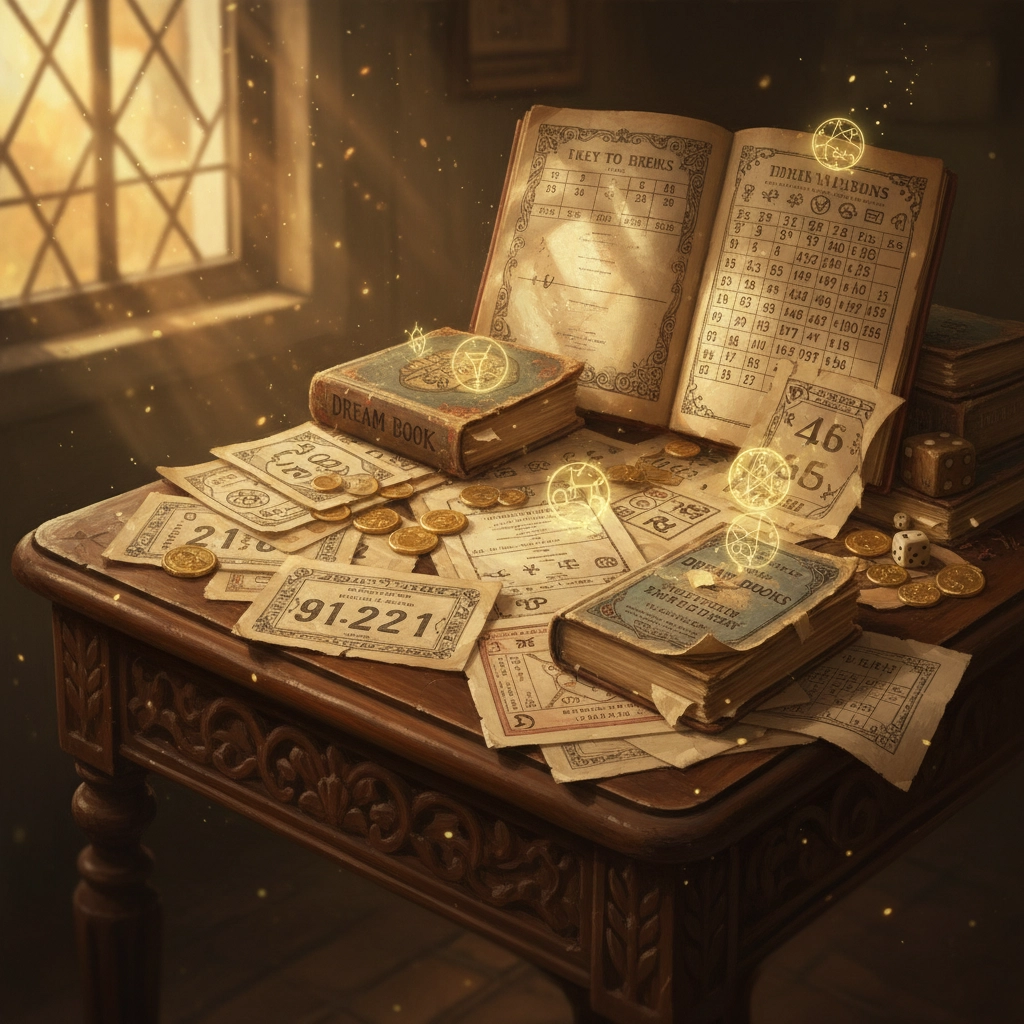
The tradition continues today, though transformed. Modern practitioners might use numerical correspondences for stock market investments, business ventures, or even choosing favorable dates for important life events. The principle remains: numbers carry spiritual intelligence that can guide material decisions.
Working with Numbers in Modern Practice
How do you integrate numerical wisdom into contemporary spiritual work? Start simple. Count your ingredients in threes, sevens, or nines. Burn candles for specific durations that honor these sacred numbers. Repeat affirmations according to traditional counts.
But remember: the numbers serve the spirit, not the ego. Don't get lost in mathematical complexity or rigid adherence to rules. If three feels right for your current work, honor three. If seven calls to you, follow seven's lead.
The ancestors who developed these traditions were practical people solving real problems. They used numbers because numbers worked, not because they looked impressive in grimoires or social media posts.
Beyond the Count: Understanding Numerical Resonance
True mastery comes when you stop counting and start feeling. Experienced practitioners develop an intuitive sense for numerical resonance: they know when they've repeated something enough, when the spiritual energy has built sufficiently, when the work is complete.
Numbers in hoodoo are like musical notes: technically precise yet emotionally expressive. A skilled practitioner plays the numerical symphony with both mathematical accuracy and spiritual sensitivity.
The next time you find yourself naturally counting something three times or feeling drawn to work for seven days, pay attention. You might be receiving guidance from the numerical wisdom that has guided practitioners for generations.
These aren't just superstitions passed down by fearful ancestors: they're sophisticated spiritual technologies developed by brilliant people who understood that the universe speaks in mathematical poetry. When we learn to listen to numbers, we join a conversation that spans centuries and touches the eternal.
The power is in your hands, and the count begins with one.

